[ad_1]
Football is a job that only a select few athletes ever get to experience at the professional level. The average career span for an NFL player is just 3.3 years. However, some players manage to carve out long-lasting careers, defying the odds and staying relevant well beyond the league average. In this veteran RB projections article, we’ll focus on players who have played eight or more seasons in the NFL. We will analyze some fantasy football trends that emerge from their extended careers. We’ve reviewed data from the past 10 years to identify any patterns. We move to the running back position which typically has the shortest career expectancy.
Veteran RB Projections | Average FPPG Experience
Elite Running Back Seasons
| Fantasy Year | Player | RB Finish | FPPG | Exp. | GP | Rushing Yards | Total TDs | Rec + Carries | Prior RB1 Finishes | Carries in 1st 3 years | RB2 Touches | Redzone Touches | Evaded Tackles |
| 2024 | Derrick Henry | 2 | 18.7 | 9 | 17 | 1921 | 18 | 344 | Yes | 501 | 89 | 60 | 72 |
| 2023 | Raheem Mostert | 3 | 17.0 | 9 | 15 | 1012 | 21 | 234 | No | 177 | 127 | 63 | 58 |
| 2016 | LeSean McCoy | 4 | 18.2 | 8 | 15 | 1267 | 14 | 284 | Yes | 635 | 110 | 44 | 80 |
| 2015 | Adrian Peterson | 5 | 15.4 | 9 | 16 | 1485 | 11 | 357 | Yes | 915 | 73 | 48 | 122 |
| 2015 | Matt Forte | 7 | 14.9 | 8 | 13 | 898 | 7 | 262 | Yes | 811 | 170 | 14 | 31 |
| 2019 | Mark Ingram | 8 | 15.3 | 9 | 15 | 1018 | 15 | 228 | Yes | 356 | 140 | 46 | 80 |
| 2024 | Joe Mixon | 9 | 14.6 | 8 | 14 | 1016 | 12 | 281 | Yes | 693 | 42 | 60 | 59 |
| 2024 | Alvin Kamara | 10 | 14.1 | 8 | 14 | 950 | 8 | 296 | Yes | 485 | 57 | 38 | 46 |
| 2017 | LeShaun McCoy | 10 | 14.6 | 9 | 16 | 1138 | 8 | 346 | Yes | 635 | 80 | 45 | 97 |
| 2015 | DeAngelo Williams | 12 | 13.2 | 10 | 16 | 907 | 11 | 240 | Yes | 538 | 137 | 49 | 68 |
| 2024 | James Conner | 14 | 12.9 | 8 | 16 | 1094 | 9 | 283 | Yes | 363 | 69 | 56 | 92 |
| 2023 | Derrick Henry | 15 | 13.7 | 8 | 17 | 1167 | 12 | 308 | Yes | 501 | 152 | 38 | 59 |
| Average | 15.2 | 15.3 | 1156.1 | 12.2 | 288.6 | 550.8 | 103.8 | 46.8 | 72.0 |
Key Takeways
- Volume is Key
- Lower Early Career Touches
- Prevoius Success in Fantasy
When it comes to running backs in fantasy football, the biggest takeaway is simple: volume matters. If you have an older fantasy running back, they need touches to produce. In fact, in 8 of the 12 RB1 seasons we studied, the player had 280+ touches in that single season. That’s a strong indicator that high volume is usually necessary for elite production.
Of course, there are exceptions. On the downside, we’ve seen backs like Aaron Jones fall short despite volume he logged 300 touches in 2024 but finished as RB20, scoring only 7 touchdowns in what was a loaded year for fantasy running backs. On the upside, we’ve also seen backs like Mark Ingram and Raheem Mostert finish as RB1s with fewer than 240 touches thanks to 15+ rushing touchdowns making up the difference.
Another key stat is many of the veteran RBs who excelled late in their careers had lighter workloads early on. Avoiding heavy workhorse touches in their first few seasons may have preserved them for longer productivity windows later in their careers.

Running backs who were stars in the 2010s but failed to sustain long-term production were compared to the backs on this data. Some of these names include Ezekiel Elliott, Todd Gurley, Leonard Fournette, and others. We took 30 running backs over the last 13 years and the average number came out to 552.4 carries.
Looking at the backs above that average, 7 of the 16 managed to produce in their 8th season or later, but only 4 of those delivered an RB1 season in their later years. These RB1 examples include generational talents like Adrian Peterson, who dominated in his ninth year and handled 357 touches, and players like Joe Mixon and LeSean McCoy, who operated as true bell cows with minimal committee interference. Matt Forte was another case, though his 13-game season likely inflated his fantasy points per game.
On the other hand, among the backs below that carry average, 12 of 14 were able to produce in the later stages of their careers. This suggests that running backs who have fewer touches early in their careers are more likely to sustain longevity and remain productive on the back end.
This trend could have interesting implications for the 2017 running back class, which we’ll examine later in this article.
Lastly, the data shows that veteran running backs who produce in their later seasons have almost always been fantasy contributors earlier in their careers. Of the 20 backs in our sample, only two had never posted an RB1 fantasy season prior to their late-career success.
It’s rare to see an experienced running back seemingly come out of nowhere to produce big numbers. The two exceptions were Cordarrelle Patterson and Raheem Mostert. Patterson spent the early part of his career as a wide receiver before transitioning to running back with the Falcons, where he became the lead option. Mostert was primarily a change-of-pace player early in his career, seeing limited work before finally getting a chance to shine in Miami for a few seasons.
RB2/Flex Value Options
| Fantasy Year | Player | RB Finish | FPPG | Experience | GP | Rushing Yards | Total TDs | Rec + Carries | RB1 Finishes | Carries in 1st 3 years | RB2 Touches | Redzone Touches | Evaded Tackles |
| 2021 | Cordarrelle Patterson | 17 | 13.0 | 9 | 16 | 618 | 11 | 205 | No | 24 | 182 | 42 | 48 |
| 2015 | Jonathan Stewart | 17 | 11.9 | 8 | 13 | 989 | 7 | 258 | Yes | 583 | 80 | 49 | 81 |
| 2016 | Frank Gore | 19 | 12.2 | 12 | 16 | 1025 | 8 | 301 | Yes | 699 | 73 | 35 | 20 |
| 2024 | Aaron Jones | 20 | 12.7 | 8 | 17 | 1138 | 7 | 306 | Yes | 450 | 74 | 57 | 35 |
| 2015 | Darren McFadden | 21 | 11.0 | 8 | 16 | 1089 | 3 | 279 | Yes | 440 | 86 | 27 | 43 |
| 2015 | Frank Gore | 21 | 11.0 | 11 | 16 | 967 | 7 | 294 | Yes | 699 | 41 | 38 | 55 |
| 2024 | Kareem Hunt | 22 | 10.2 | 8 | 13 | 728 | 7 | 223 | Yes | 496 | 95 | 50 | 34 |
| 2017 | Marshawn Lynch | 22 | 10.3 | 10 | 15 | 891 | 7 | 227 | Yes | 650 | 91 | 25 | 44 |
| 2016 | Matt Forte | 22 | 12.0 | 9 | 14 | 813 | 8 | 248 | Yes | 811 | 189 | 36 | 68 |
| 2022 | Cordarrelle Patterson | 23 | 11.1 | 10 | 13 | 695 | 8 | 165 | No | 24 | 226 | 33 | 65 |
| 2018 | Adrian Peterson | 24 | 11.2 | 12 | 16 | 1042 | 8 | 271 | Yes | 915 | 84 | 33 | 80 |
| 2016 | Jonathan Stewart | 25 | 11.0 | 9 | 13 | 824 | 9 | 226 | Yes | 583 | 82 | 41 | 65 |
| 2022 | Latavious Murray | 26 | 10.1 | 9 | 13 | 760 | 6 | 198 | Yes | 543 | 115 | 12 | 36 |
| 2018 | Mark Ingram | 27 | 11.0 | 8 | 12 | 645 | 7 | 159 | Yes | 356 | 277 | 29 | 34 |
| 2017 | Frank Gore | 28 | 9.9 | 13 | 16 | 961 | 4 | 290 | Yes | 699 | 114 | 26 | 46 |
| 2022 | Raheem Mostert | 31 | 9.6 | 8 | 16 | 891 | 5 | 212 | No | 177 | 96 | 16 | 99 |
| 2024 | Austin Ekeler | 34 | 8.1 | 8 | 12 | 367 | 4 | 112 | Yes | 285 | 200 | 22 | 46 |
| 2016 | Darren Sproles | 36 | 9.1 | 11 | 15 | 438 | 4 | 146 | Yes | 106 | 168 | 24 | 31 |
| 2017 | Matt Forte | 36 | 8.5 | 10 | 12 | 381 | 3 | 140 | Yes | 811 | 201 | 14 | 19 |
| Average | 10.7 | 14.4 | 803.3 | 6.5 | 224.2 | 492.2 | 130.2 | 32.1 | 49.9 |
In the second tier of experienced running backs, you’ll still find players who can provide useful fantasy production that helps fill a lineup rather than carry it. On average, production in this tier drops sharply, with rushing yards falling from 1,156 to 803 and touchdowns cut nearly in half.
There are a few notable outliers. Aaron Jones posted 1,138 rushing yards but only scored 7 touchdowns, while Cordarrelle Patterson managed 11 touchdowns despite just 618 rushing yards.
Unlike Tier 1, this group includes several backs in the 10–13 years of experience range who still finished as RB2 or Flex options. In the past decade, only DeAngelo Williams in Tier 1 reached RB1 status with 10 years of experience. However, Tier 2 has 9 instances of running backs with 10+ years finishing inside the top 36.
Notably, no running back beyond 13 years of experience has cracked the top 36 in the last decade. The only ones to do it with 12 years under their belt were Frank Gore and Adrian Peterson, which underscores just how short a running back’s fantasy lifespan truly is.
2025 Veteran RB Projections
There are 10 running backs entering 2025 with 8 or more years of NFL experience who are expected to hold either a starting job or a significant backup role in their respective offenses.
Welcome to the Year 8 Club
Saquon Barkley | Repeat Glory or Disaster
Our first candidate is Saquon Barkley, who enters the 2025 season carrying a lot of bad trends on his back. He’s on the Madden cover, he was last year’s RB1 in fantasy, and he’s coming off a 2,000-yard season. None of those factors directly impact his ability, but historically, they haven’t been great omens for running backs.
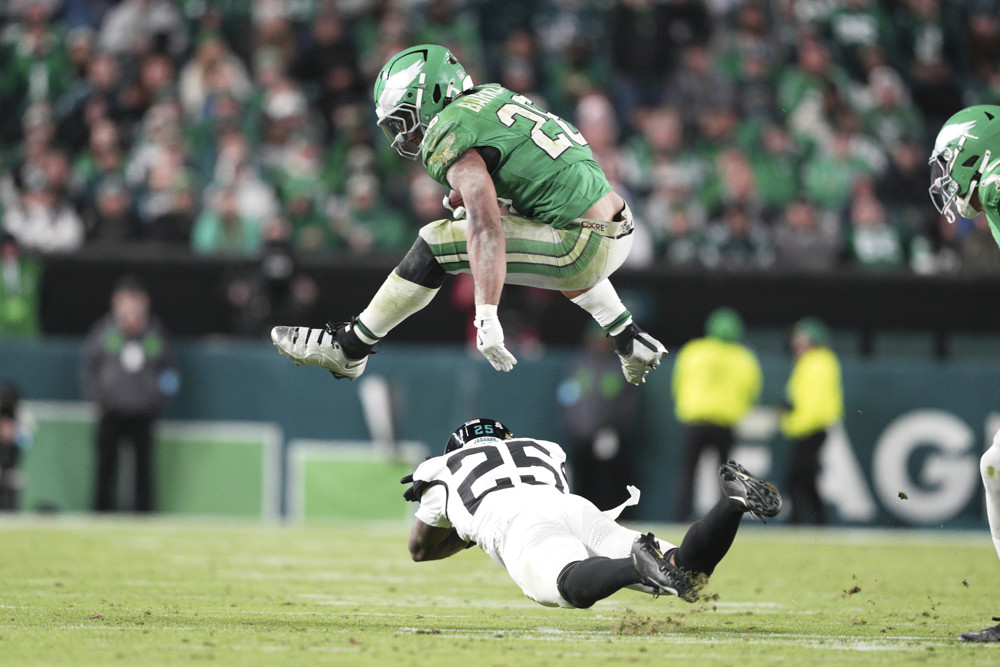
The Madden Curse may have softened over the years, but for running backs it’s still been rough with Adrian Peterson being the lone exception. In the past five seasons, the best fantasy finish by an RB coming off an RB1 campaign was RB8 (Alvin Kamara). And for 2,000-yard rushers, history says regression is inevitable: all but one saw their yardage drop by 700+ yards the following season.
On the positive side, Barkley is part of one of the best offenses in football and should continue to dominate touches in the backfield. Historically, of the 12 times we’ve seen a veteran RB post a top-12 fantasy finish, 6 occurred in their 8th season, including 4 just last year.
If Barkley stays healthy, he should have a strong shot at matching the average RB1 season of roughly 1,100 yards and 12 touchdowns in 2025. It’s an uphill battle given the trends, but his talent and role make another RB1 finish a very real possibility.
Nick Chubb | Something Left in the Tank?
Another Year 8 running back joining the club is Nick Chubb, who signed with the Houston Texans this offseason to back up incumbent starter Joe Mixon. Chubb won’t see the same type of workload as Saquon Barkley, but he could still carve out a meaningful role in 2025—especially if Mixon’s injury issues linger.
However, Chubb comes with concerns. He’s already on the wrong side of the workload curve, racking up 678 carries in his first 3 seasons. The Texans’ backfield is full of question marks, and the offensive line remains a weakness.
In an optimistic scenario, Chubb could put up a Latavius Murray-type season around 700 yards and 6 touchdowns but there’s also a realistic chance he ends up closer to 300 yards and outside the top-36 RBs. At best, he’s an average bench piece who could spike in value if the Texans depth chart changes midseason.
The Historic 2017 Class
Now we move over to the 2017 draft class who are all heading into year 9 of thier NFL season. They were a class who thrived in fantasy in 2024.
Christian McCaffrey | Injury Prone or Superstar
Christian McCaffrey is looking to rebound in 2025 after missing more than half of last season. With the 49ers set to be without several key weapons from a year ago, they may need to lean heavily on McCaffrey to carry the offense and fantasy teams when healthy.
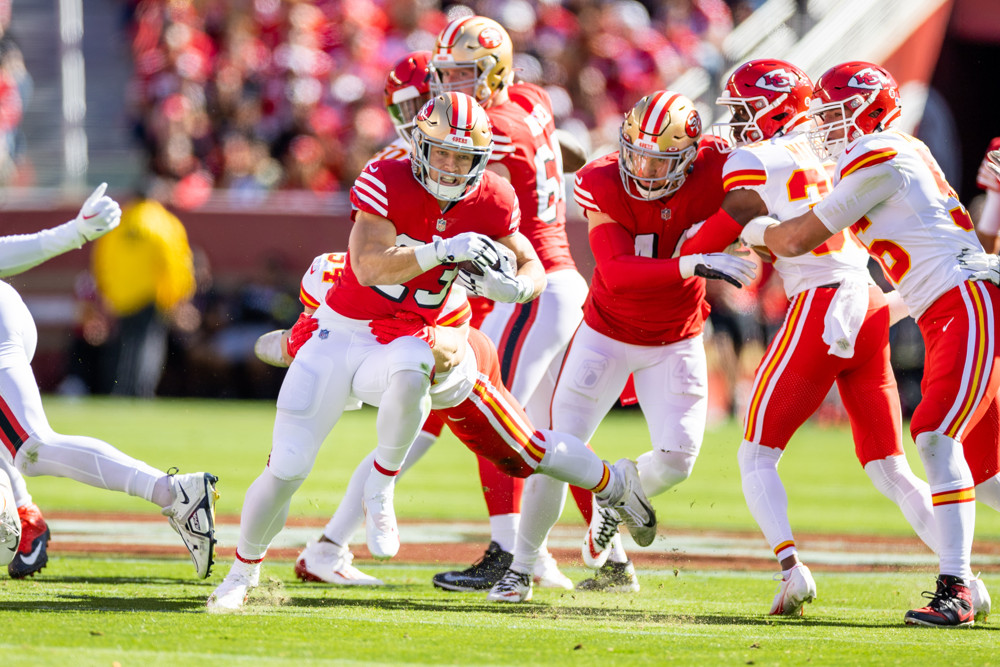
The biggest question mark is durability. McCaffrey has played fewer than eight games in three of the last five seasons. The closest comparison might be Adrian Peterson, who famously returned from a torn ACL to post an RB1 season, but Peterson didn’t have the same extensive injury history McCaffrey does.
When McCaffrey is on the field, he offers elite RB1 upside. However, drafting him in 2025 means accepting the risk that his season could be cut short again.
Alvin Kamara | The Bayou PPR Machine
Alvin Kamara finished as the RB10 last season in his 8th year, but 2025 could bring some regression. The Saints offense may struggle even more this season, potentially leading to fewer touchdown opportunities for Kamara.
New Orleans could also begin to work in Kendre Miller, along with rookie Devin Neal, which could cut into Kamara’s workload. His saving grace is his passing-game involvement he averaged five targets per game when playing with Spencer Rattler, and he could likely see similar usage with Tyler Shough under center.
Kamara still has the ceiling of a borderline RB1, but the more realistic outcome for 2025 is a mid-RB2 finish.
Aaron Jones | The Minnesota 1A
Moving over to Minnesota, Aaron Jones is coming off his first season with the Vikings and the most touches of his career. Despite rushing for 1,100 yards, he finished just RB20 in fantasy points per game.
The Vikings signaled a desire to make this backfield more of a committee by trading for Jordan Mason. Last season, Minnesota’s RB2 saw only 64 carries, but training camp rumors suggest a more even split in 2025.
Jones has always been an efficient runner, so he could still hover around 10 fantasy points per game. However, his best-case scenario this season is borderline RB2 production for dynasty managers.
James Conner | Ice Age Coming to Arizona
Cardinals running back James Conner enters his ninth NFL season coming off the highest touch total of his career. Last year was also the first time he managed to play a full season. At his age, it’s difficult to project another full campaign of health, especially with the buzz surrounding rookie Trey Benson in Cardinals camp. Much like Aaron Jones, Conner could see a reduced workhorse role in 2025. He profiles best as a borderline RB2, with a few upside weeks likely in the early part of the season.
Joe Mixon | Downfall Coming!?
Rounding out the starting group is Joe Mixon, who delivered one of the rare RB1 seasons from a running back with eight or more years of experience, during his first year with Houston. He started hot, scoring 12 touchdowns in his first 10 games, but faded down the stretch—especially during the fantasy playoffs.

Mixon is now recovering from a foot injury suffered this offseason, a red flag for any player before the year even begins. Foot injuries can linger, and it’s hard not to think back to Deebo Samuel’s struggles in 2020.
Despite last season’s production behind a mediocre run game, Houston’s offensive line got worse after trading away Laremy Tunsil. Mixon’s 245 carries from last year could take a significant hit with Nick Chubb, a healthy Dameon Pierce, and rookie Woody Marks all in the mix.
Given the injury risk, declining situation, and competition for touches, Mixon is a player to avoid and it wouldn’t be surprising if he failed to crack the top 30 running backs in 2025.
Kareem Hunt | Still in the Hunt
Our first backup in this group is Kareem Hunt, who returned to Kansas City last season and put up solid numbers, finishing as an RB2 in fantasy. That production was largely due to Isiah Pacheco being lost for the year early on, forcing the Chiefs to lean on a proven veteran.
In 2025, Hunt’s situation could shift to a true committee or a healthy Pacheco could reclaim the clear lead role. The additions of Elijah Mitchell and speedster Brashard Smith also create competition for the RB2 spot in the offense. Unless Pacheco misses significant time again, Hunt profiles as a borderline RB3 this season.
Austin Ekeler | Disappearing Act
The final relevant member of the 2017 class is Austin Ekeler. The Commanders running back barely cracked the top 36 in the last 10 years, averaging just eight fantasy points per game in 2024. That number may have been inflated, as he averaged 15 fantasy points in three games without Brian Robinson Jr.
Heading into 2025, Ekeler could be on the outside looking in. Robinson should continue to dominate goal-line work thanks to his size and power, while rookie Jacory Croskey-Merritt has been turning heads in training camp and could push for a larger role.
Unless Ekeler can recapture PPR value through heavy receiving usage, he’s another veteran from this class who could finish outside the top 30 running backs in 2025.
On Their Last Few Runs
Raheem Mostert | True Backup Role
Raheem Mostert will serve as the backup to rookie Ashton Jeanty with the Raiders. Under Pete Carroll, we’ve seen inconsistent workhorse approach at running back, but Jeanty has the skill set to handle 275 carries as a rookie. That leaves Mostert with limited chances for a significant workload in 2025.
Historically, running backs with 12 years of NFL experience almost never produce at a high level outside of rare exceptions like Frank Gore and Adrian Peterson. Given his age, role, and the presence of a high-volume rookie, Mostert faces an uphill climb to fantasy relevance this season.
Derrick Henry | A Legendary Season Coming?
We may be heading into an outlier-type season for Ravens running back Derrick Henry. Coming off the second-best fantasy season of his career, Henry experienced a rejuvenation in Baltimore, posting 1,900 yards and 16 touchdowns in 2024.
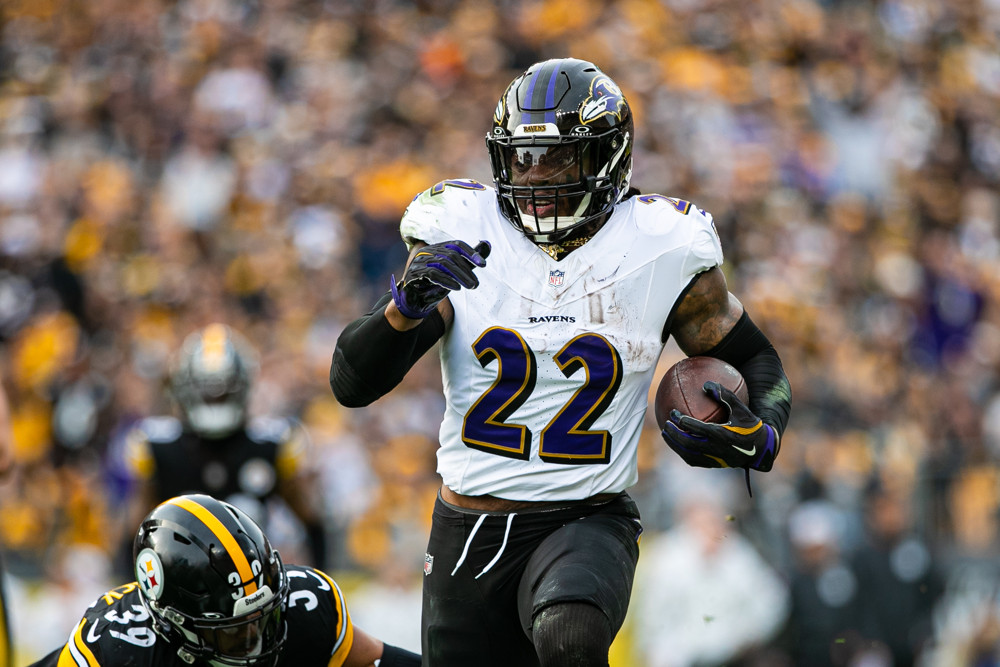
Entering his 10th NFL season, some level of regression should be expected. The most recent example of a strong Year 10 from a running back is Frank Gore, who put up 1,100 yards and 4 touchdowns in that campaign. But Henry is a different kind of back—one we’ve rarely seen, if ever, in NFL history.
Baltimore’s offensive system remains largely unchanged in 2025, giving Henry the chance to keep producing. Even if his numbers fall back to his 2023 output when he finished as RB15 in fantasy points per game he’d still be providing valuable production.
It may be uncharted territory with Henry this season, but if he stays healthy, there’s still a legitimate path to RB1 numbers in 2025.
ICYMI: Veteran QB Projections
See which veteran QBs are likely to repeat their 2024 performances, who is likely to regress, and what it all means for our dynasty teams:
[ad_2]
Source link