Utah fired men’s basketball coach Craig Smith on Monday, citing “greater aspirations” for a program with just four NCAA Tournament appearances since the end of the Rick Majerus era in 2004, most recently in 2016.
Assistant coach Josh Eilert, West Virginia’s interim coach last season, will be acting head coach the remainder of this season.
While Smith failed to take the Utes to the Big Dance, going 65-62 in almost four full seasons, the timing of this decision is definitely peculiar. After all: Smith and the Utes upset Kansas and Kansas State at home last week, arguably their best wins all season. No, those victories weren’t going to push Utah into the Big Dance, but canning Smith so quickly thereafter has raised some questions in basketball circles — especially about whether Utah already has its next head coach lined up.
Change in Leadership of Utah Men’s Basketball Program Announced by Mark Harlan
More: https://t.co/Ux06TKkfwB#GoUtes pic.twitter.com/QX23YFgJqr
— Utah Athletics (@utahathletics) February 24, 2025
How good is the job?
Depends what the next coach can secure in NIL resources. That’s what did Smith in as much as anything, although obviously a .500 record at a high-major program isn’t up to snuff. Realistically, the Utes weren’t financially prepared to make the move to the Big 12, one of the deepest (and richest) basketball conferences in the country — and unless the NIL commitment for their next coach is more significant, good luck to him.
Because of that reality, there’s been significant chatter about Utah potentially hiring one of its own: namely, a former player from the program’s golden era under Majerus who could reinvigorate the fan base — or, more plainly, get supporters to open their wallets. There is no understating the importance of finances with this hire. That’s especially true because of what’s happened at rival BYU, which hired former Phoenix Suns assistant coach Kevin Young last offseason and has reaped the NIL benefits ever since. With Young in tow, BYU’s donors ponied up enough to land AJ Dybantsa, the No. 1 recruit in the 2025 class, over fellow finalists Alabama and North Carolina. Industry chatter also suggests that Utah may go that route, hiring someone with NBA experience and the ability to better manage college hoops’ de facto salary cap.
As for the school itself, per U.S. Department of Education data from 2022-23 (the most recent year for which it is available), Utah spent $12.8 million on men’s basketball expenses, which ranks 23rd nationally among public institutions. That’s one spot behind Alabama — which made the Final Four last season — and two ahead of Michigan, one of the most prominent brands in the sport. The university also opened a $36 million practice facility in 2015, which is among the newer and nicer at the high-major level. Translation: The university itself has resources but needs to find a way to fundraise if it wants to recruit winning talent. Easier said than done.
Call list (in alphabetical order)
Johnnie Bryant, associate head coach, Cleveland Cavaliers: Bryant still holds the program’s 3-point percentage record, and he checks the “former player” and “NBA experience” boxes Utah may be looking for. The 39-year-old got his coaching start with the Utah Jazz, first as a player development assistant and later as an assistant coach under Quin Snyder. He left in 2020 to become the New York Knicks’ associate head coach and joined the Cavaliers in the same role this offseason under first-year Cleveland coach Kenny Atkinson. Bryant is young, knows the program and region well and has multiple years of NBA success across multiple organizations. He’s never coached in college, and would need to surround himself accordingly, but this would feel a lot like Utah’s version of BYU hiring Young.
Chris Burgess, assistant coach, BYU: Another former player, this time from the Majerus era, Burgess had a lengthy overseas career before getting into coaching. The Utah native got his start with Mark Pope at Utah Valley from 2015 to 2019, and then followed Pope to BYU. The 45-year-old left BYU for two seasons — to coach under Smith at Utah, from 2022-2024 — before rejoining the Cougars as Young’s lead assistant last offseason. Burgess has deep ties to the region and, like Bryant, would be a familiar name to the fan base. But he’s never been a head coach at any level, and his ties to Smith could complicate things.
Bryce Drew, head coach, Grand Canyon: If Utah wants someone with college head coaching experience, Drew fits the bill. Between his time at Valparaiso (his alma mater), Vanderbilt and now Grand Canyon, Drew is in the midst of his 13th season running a college program. And while the 50-year-old’s tenure at Vandy didn’t end well, his success at Grand Canyon — four straight 20-win seasons, plus three NCAA Tournament appearances in four seasons — suggests he’s ready for another crack at a bigger gig. Plus, there is a benefit to hiring someone who’s been a high-major coach before, and who has recruited at that level; don’t forget that Drew brought Darius Garland and Aaron Nesmith to Nashville.
Chris Gerlufsen, head coach, San Francisco: The first up-and-coming college name on our list, Gerlufsen doesn’t have Utah ties but is on an upward trajectory. The 48-year-old is 65-31 midway through his third season at San Francisco. Given his immediate predecessors with the Dons — Florida coach Todd Golden and Stanford coach Kyle Smith — it’s only a matter of time until Gerlufsen gets a bigger break, too. Making the NCAA Tournament this season would help his case, and this might not be the right fit, but that opportunity isn’t far off.
Alex Jensen, assistant coach, Dallas Mavericks: A starter on Utah’s 1998 team that made the national title game, Jensen is another who ticks multiple boxes. Not only is the 48-year-old from Utah originally, but he spent a decade in the area as a Utah Jazz assistant (where he overlapped with Bryant). One potential separator in Jensen’s favor — especially if Utah has its eyes on what BYU is doing down the road — is his international experience. Jensen is a former assistant for the German national team, and in 2022, he coached the United States in the FIBA AmeriCup. Given BYU’s success recruiting international players, including current freshman (and likely lottery pick) Egor Demin, Jensen’s ties abroad — combined with his substantial coaching resume and history with the program — may be the tiebreaker.
Andre Miller, head coach, Grand Rapids Gold: A former Utah All-American whose number was retired by the program, Miller would bring instant name recognition to the job. And if boosters are looking for someone to throw resources at? Well, there are worse choices than one of the stars of that 1998 national runner-up team. Miller played almost two decades in the NBA, experience that would seemingly come in handy on the recruiting trail. That said, with only three seasons coaching in the G League, the 48-year-old is the least-experienced option on our list, and therefore something of a gamble. But his name and pedigree — and the recent trend of colleges hiring former players — still makes him a strong contender.
Eric Olen, head coach, UC San Diego: If we’re strictly talking coaching acumen, Olen merits consideration. His Tritons are 24-4 this season, one of the best mid-major teams in America and a potential Cinderella in the NCAA Tournament because of their sturdy offense (No. 50 in KenPom’s adjusted efficiency rankings) and propensity for turning teams over. The 44-year-old is the rare coach young enough to still make multiple moves but experienced enough to be patient about the best fit. Is this it? Olen is an Alabama native whose entire coaching career has come in San Diego, and the lack of Utah ties is notable compared with other candidates.
And the hire is …
Almost definitely someone with ties to the program’s glory days, and ideally one who also possesses NBA experience. So, Jensen or Miller — whichever Utes player-turned-coach the program’s deepest-pocketed boosters prefer. Both have their relative strengths: Miller’s name-brand recognition and ability to ignite a fan base that remembers his role on the 1998 team; and Jensen’s lengthy NBA experience and international ties.
But if we had to choose? We go Jensen, because of his more-extensive coaching history and his relationships overseas that could pay immediate dividends on the recruiting trail.
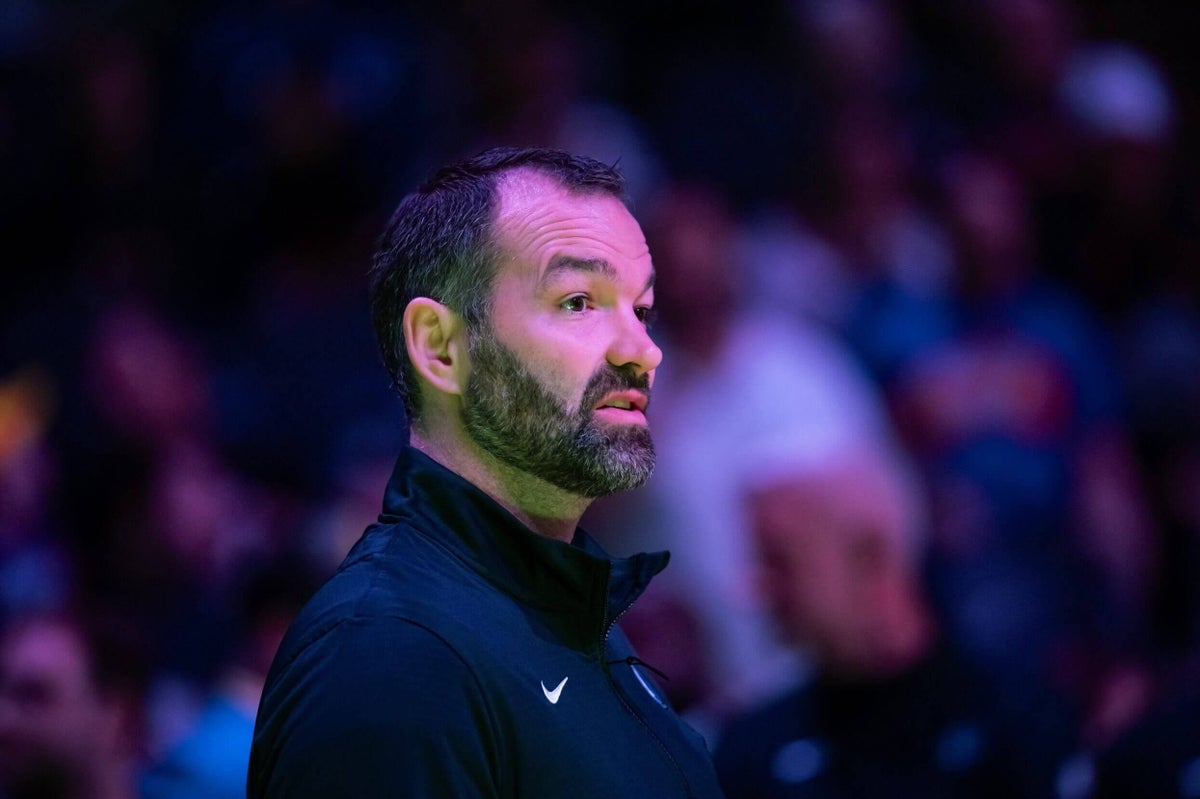
(Photo of Dallas Mavericks assistant coach Alex Jensen: Mark J. Rebilas / Imagn Images)