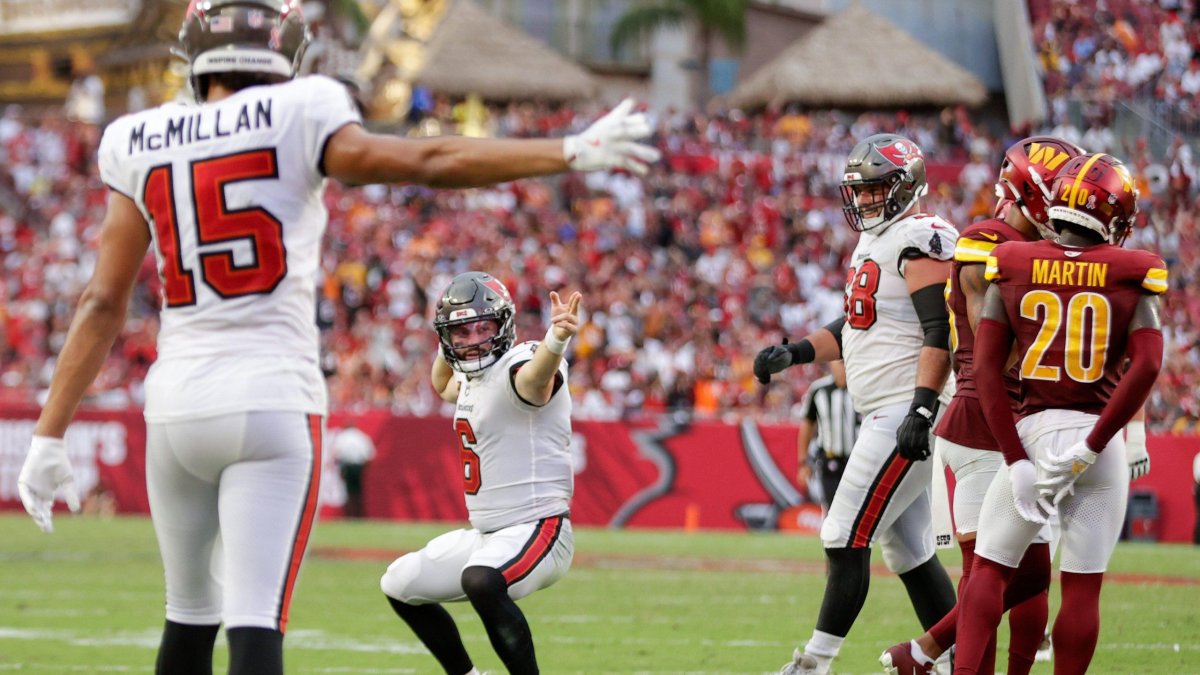
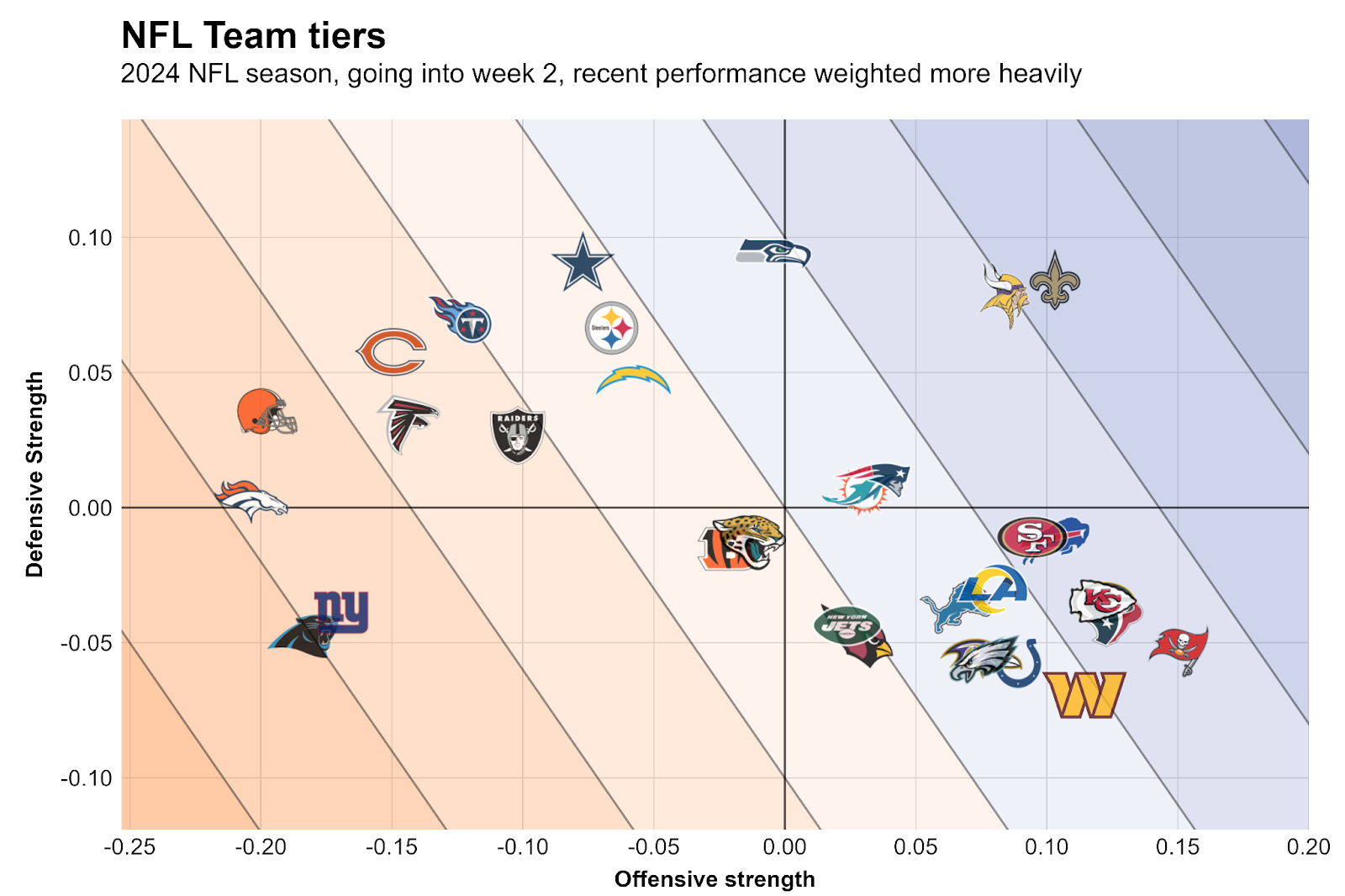
• The Buccaneers’ offense leads the way: Baker Mayfield and Tampa Bay carved up the Commanders in Week 1, and they pace the pack in our offensive team tiers as a result.
• Mike Macdonald has his defense in good shape already: Seattle’s new head coach has his unit at the top of our tiers after Week 1, following a strong showing against the Denver Broncos.
• Unlock your edge with a PFF+ subscription: Get full access to all of our in-season fantasy tools, including weekly rankings, WR/CB matchup charts, weekly projections, the Start-Sit Optimizer and more. Sign up now!
Estimated Reading Time: 4 minutes
This article will be a weekly statistical review of all NFL teams during the 2023 season.
For more statistics, snap counts and PFF grades from the 2024 NFL season, check out PFF Premium Stats.
Team Strengths
The following chart shows how good teams have been by expected points added per play. To improve predictive power, high-leverage plays such as turnovers and goal-line plays are down-weighted a bit. Additionally, the team strengths account for opponents faced and recent performances count more toward the estimated team strength than performances earlier in the season.
Note that the opponent adjustments and time-weighting, of course, don’t play a role after only one week of games.
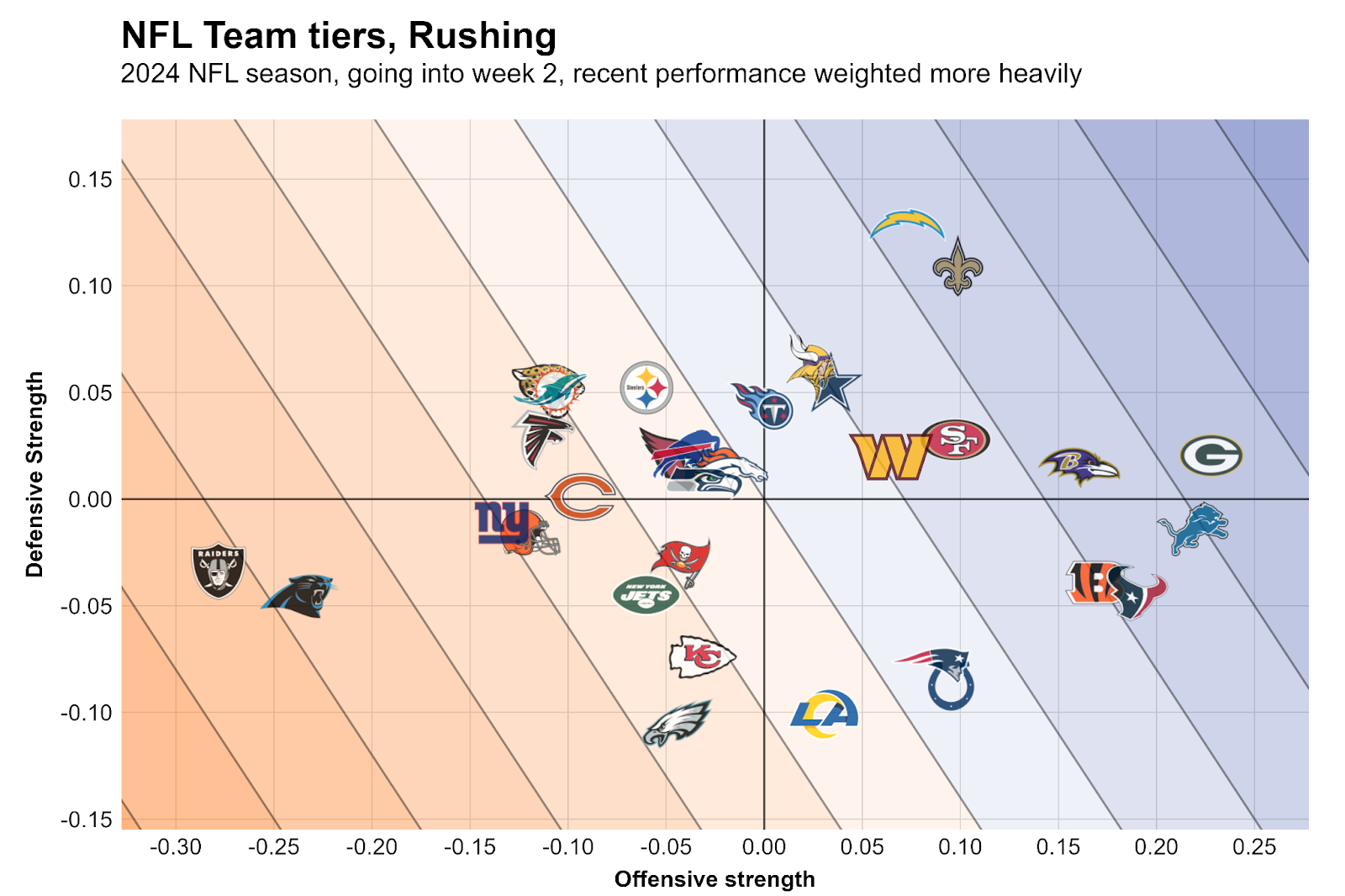
We will also separate the teams by rushing and passing efficiency. The following chart shows rushing efficiency:
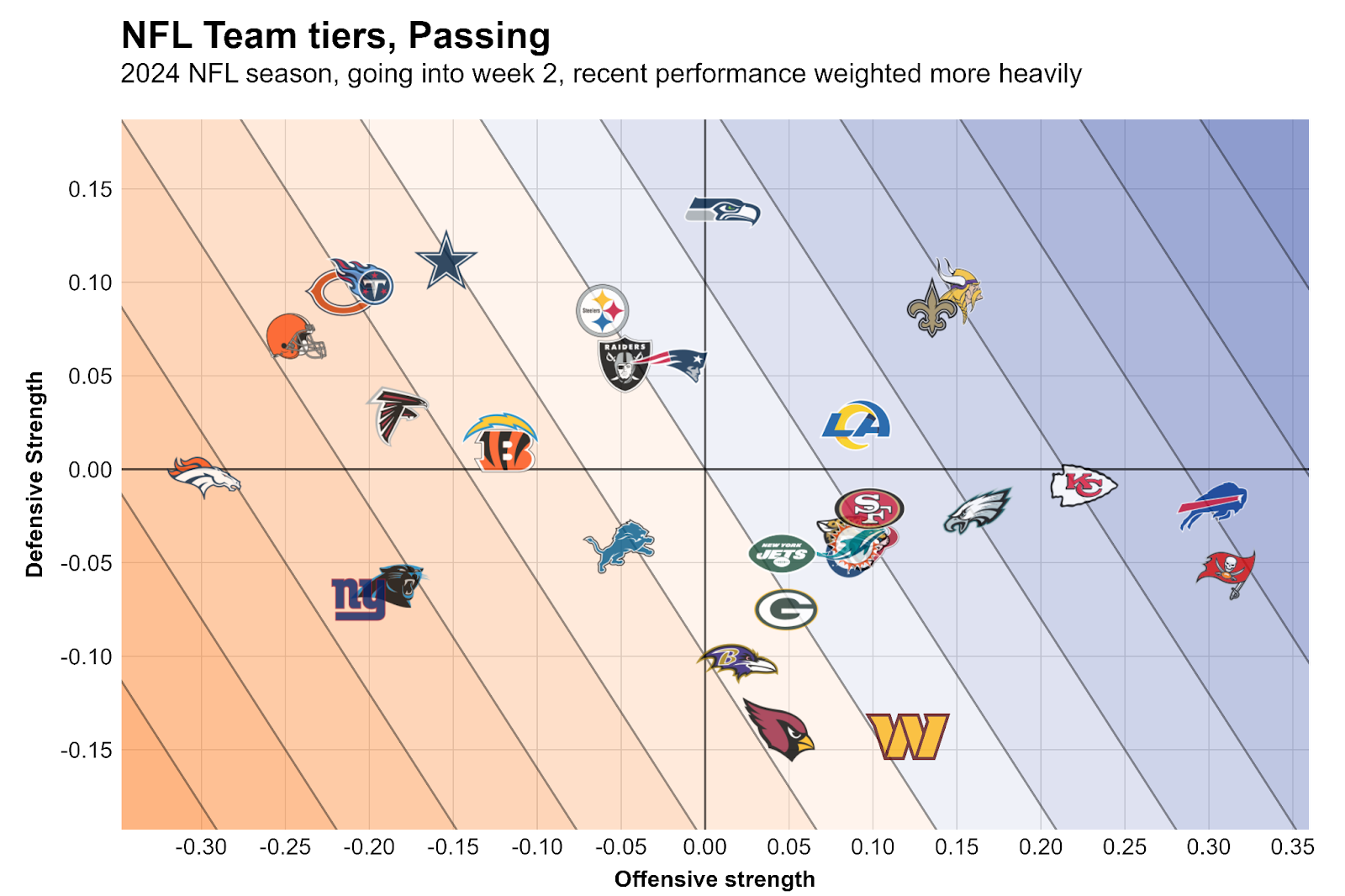
Here is the passing efficiency of each team:
Moving the sticks
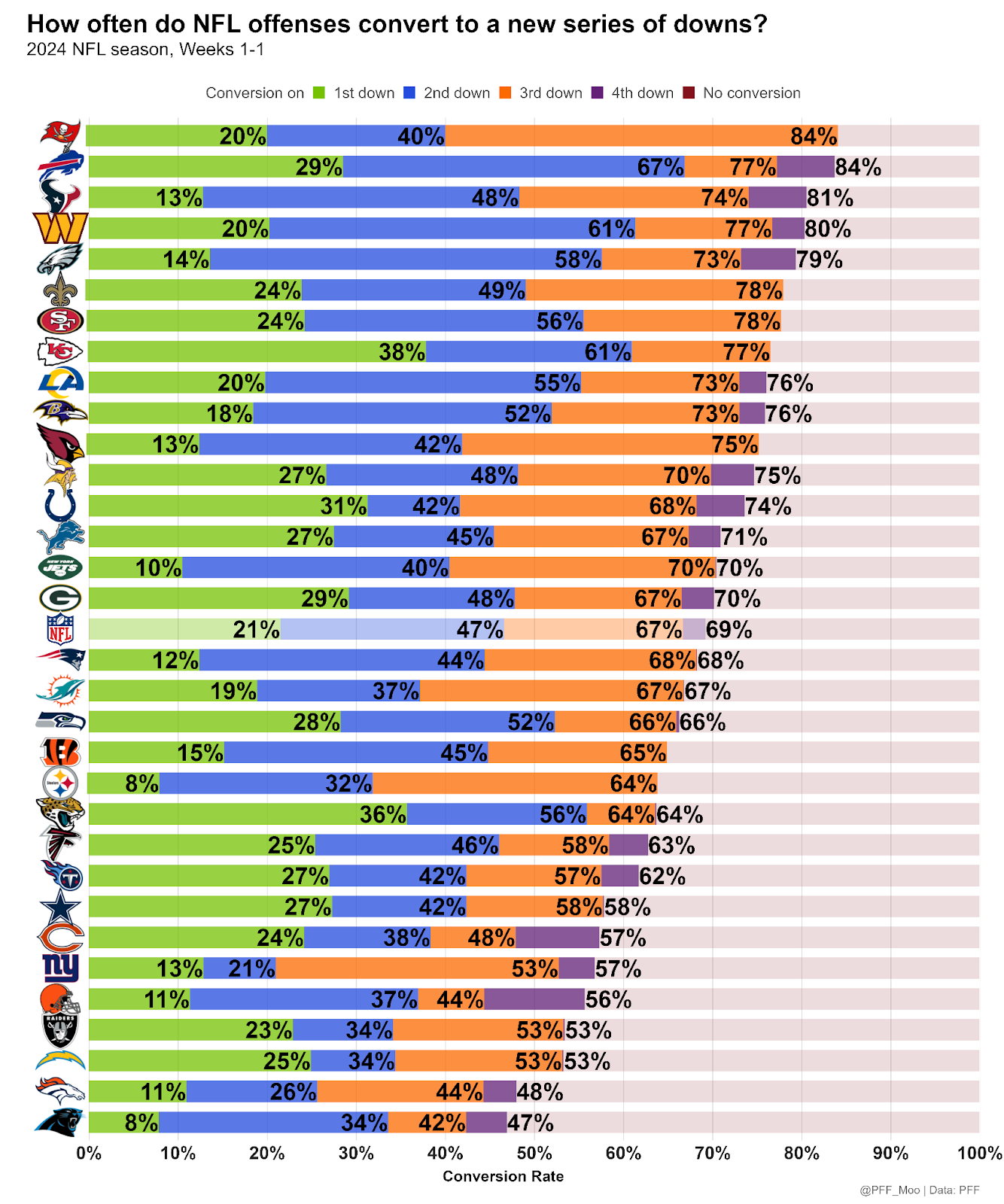
The following chart shows how often teams move the sticks — that is, convert a series of downs to a new series of downs. For example, the Buffalo Bills moved the sticks on first down 29% of the time in Week 1. They moved the sticks on the first two downs 67% of the time. After three downs, they converted to a new series of downs 77% of the time. In total (using all four downs), they moved the sticks 84% of the time.
Note that these numbers are adjusted for field position and opponent, so one could consider this to be the rate of moving the sticks when facing a league-average field position against an average defense. Just like for the team tiers, the opponent adjustments are not active after one week of play.
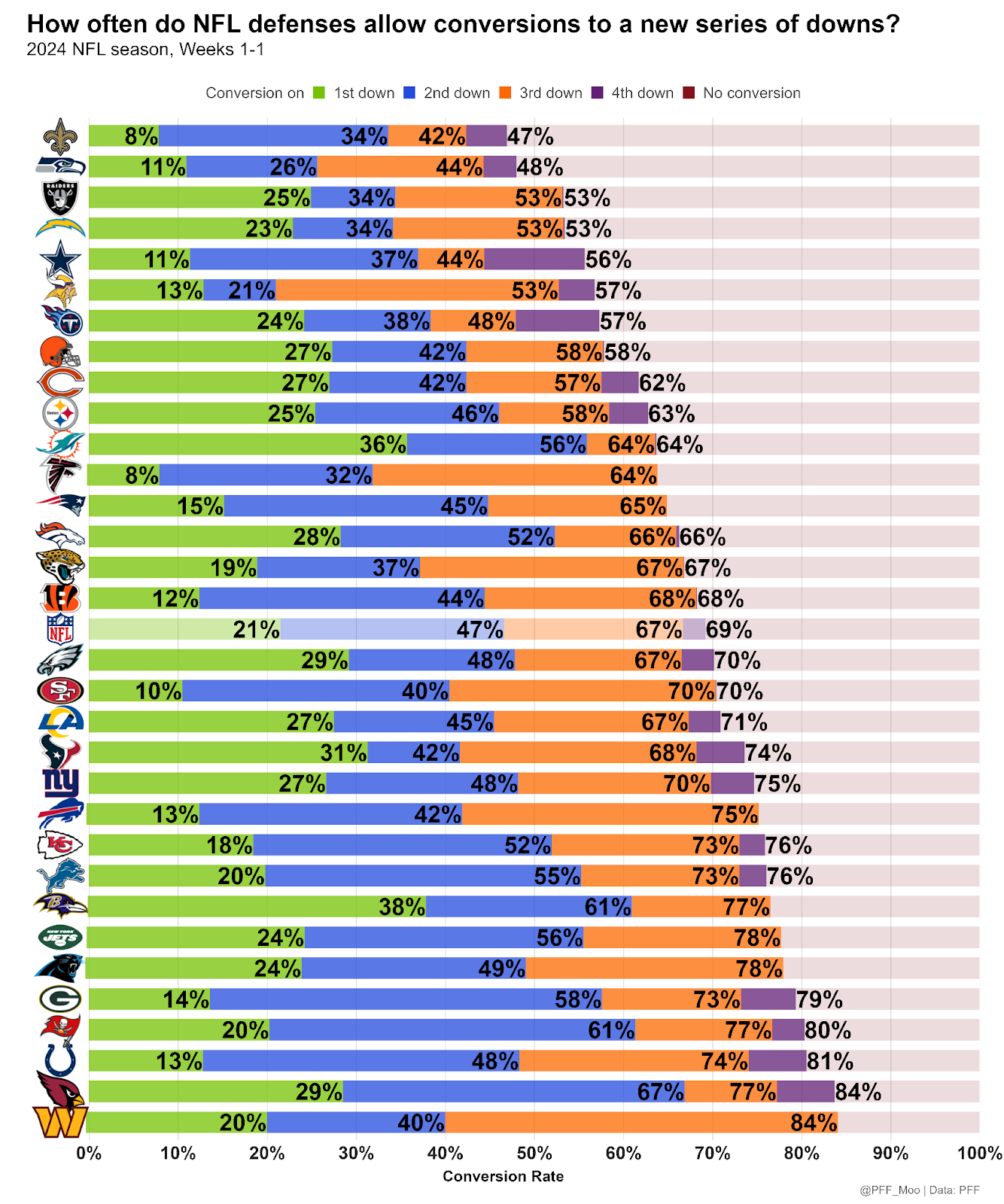
Here is the same chart for the other side of the ball, which is also adjusted for field position and opposing offenses:
Pass rates
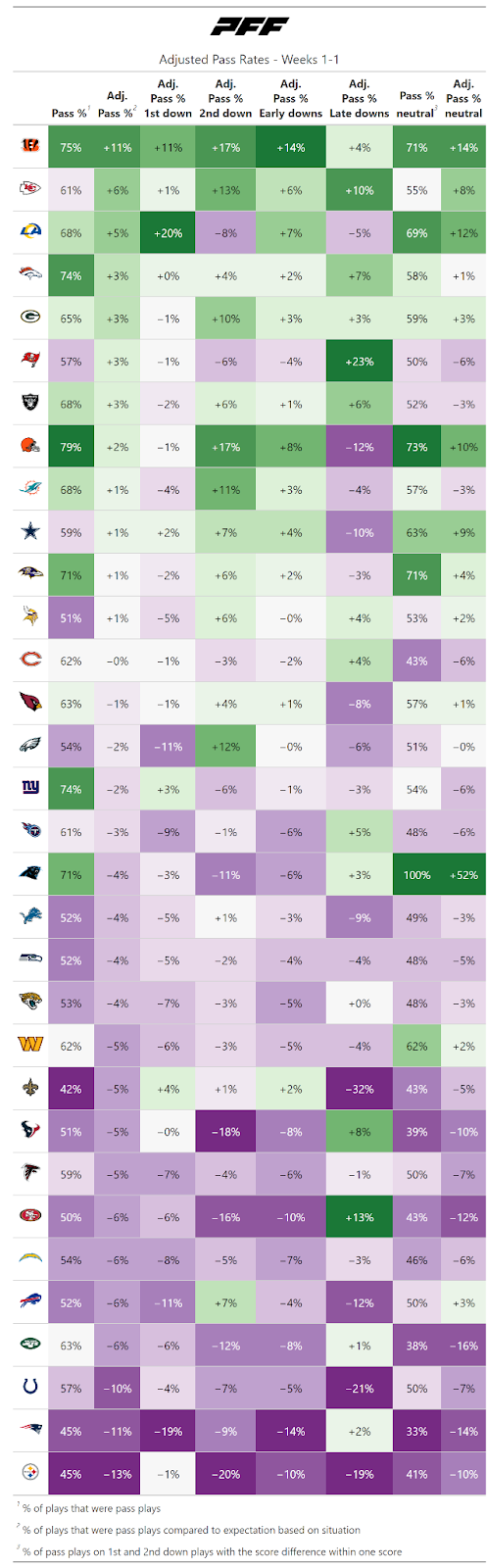
The following table shows how often teams drop back to pass, adjusted for down, distance and the current score:
Dropback outcomes
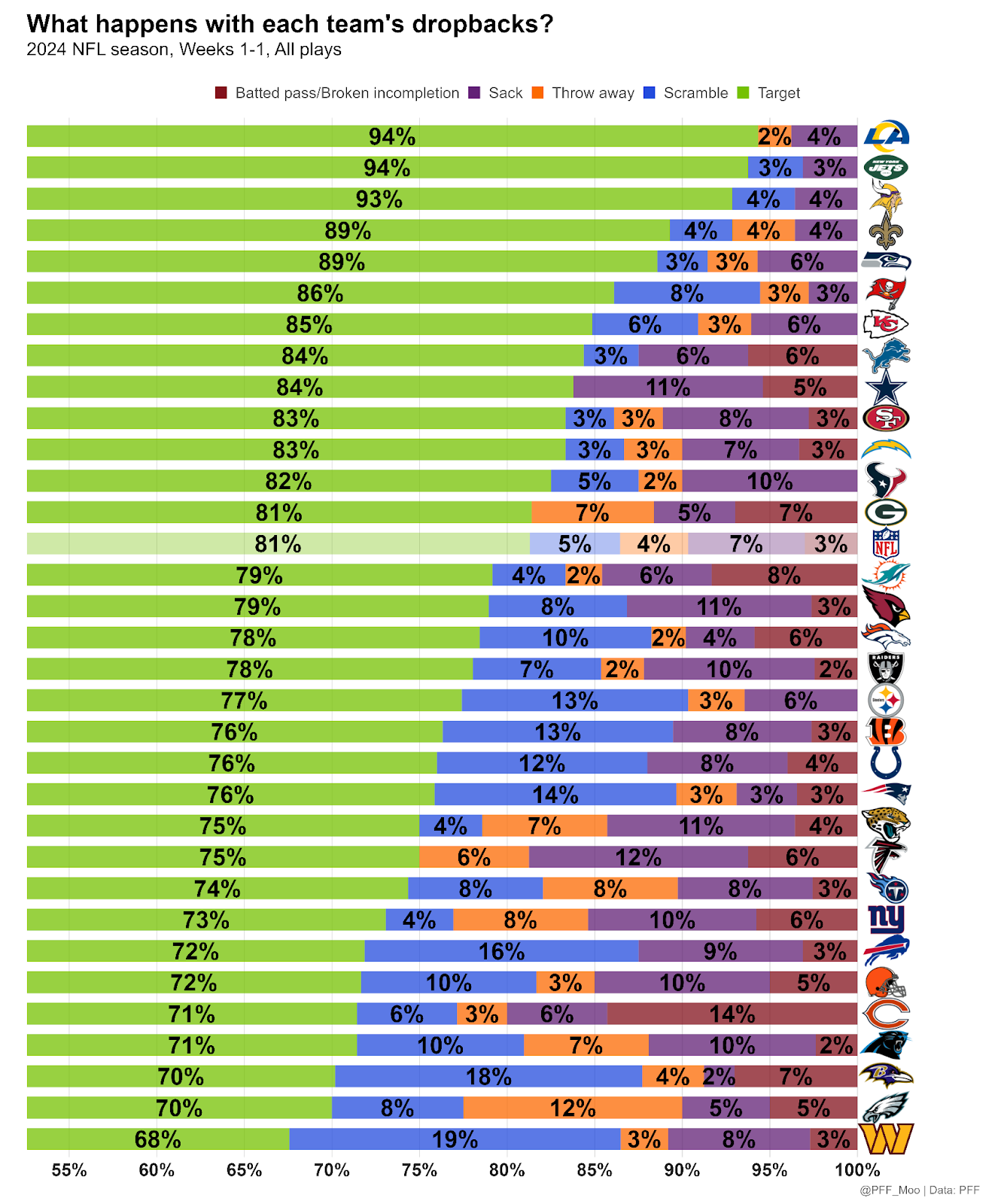
With passing targets being the most efficient outcome of a dropback on average, just throwing more often than other teams can already be an important indicator of a good offense. There are notable exceptions for offenses with mobile quarterbacks, but teams mostly want to have a large green bar (targets) and a small purple bar (sacks) in the chart below:
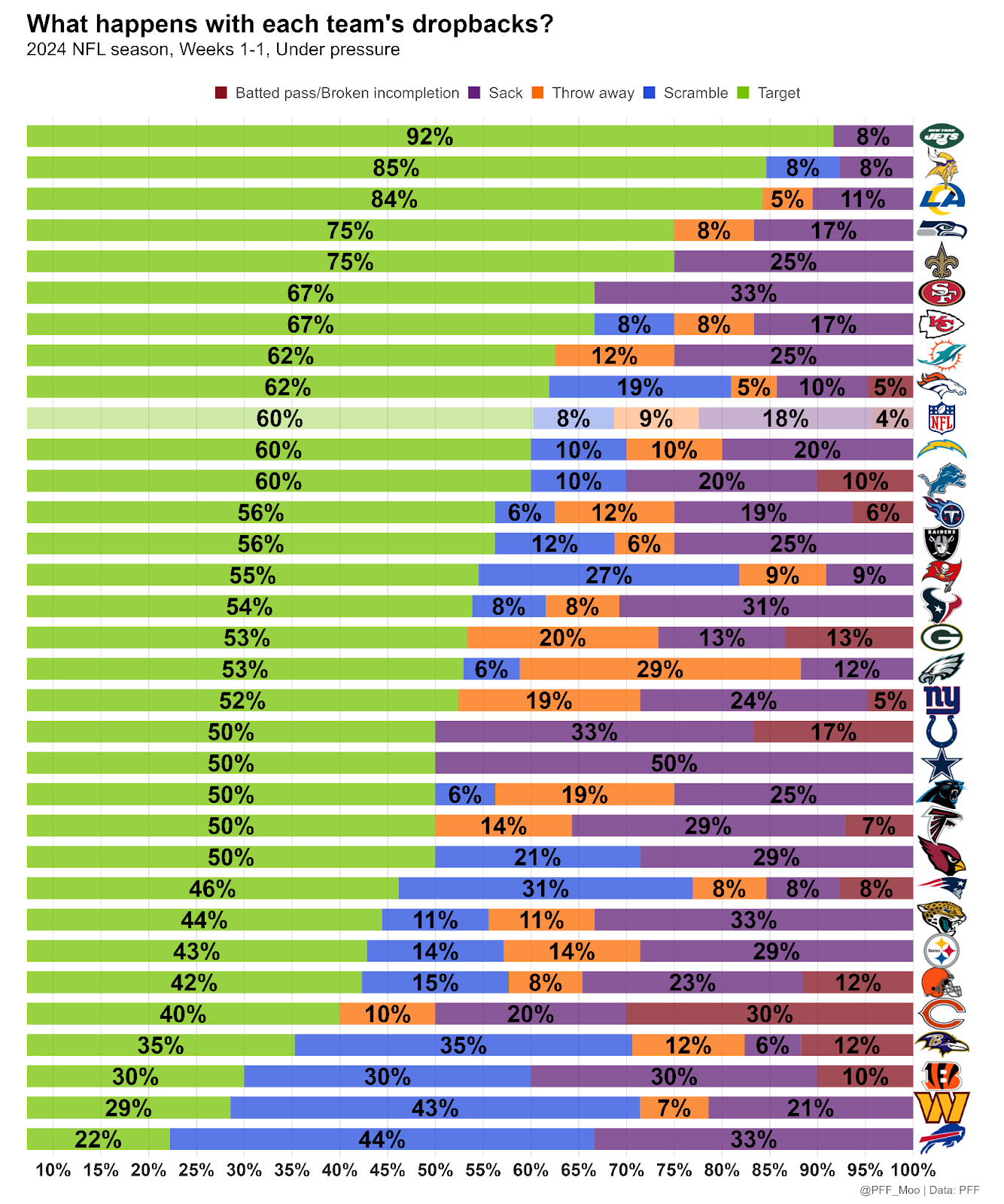
Here is the same chart for when the quarterback is under pressure. Note that the sample size might be very low after only one game:
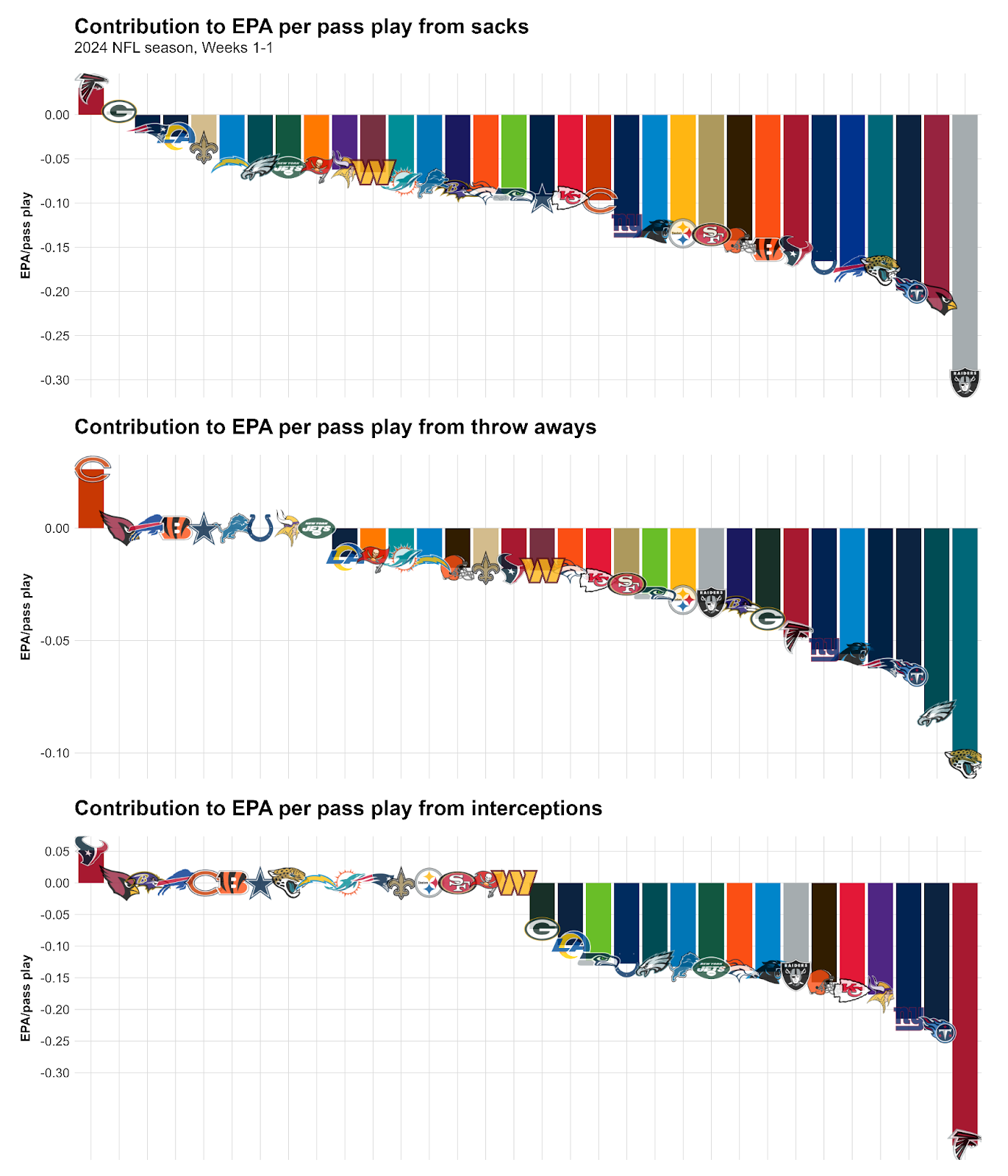
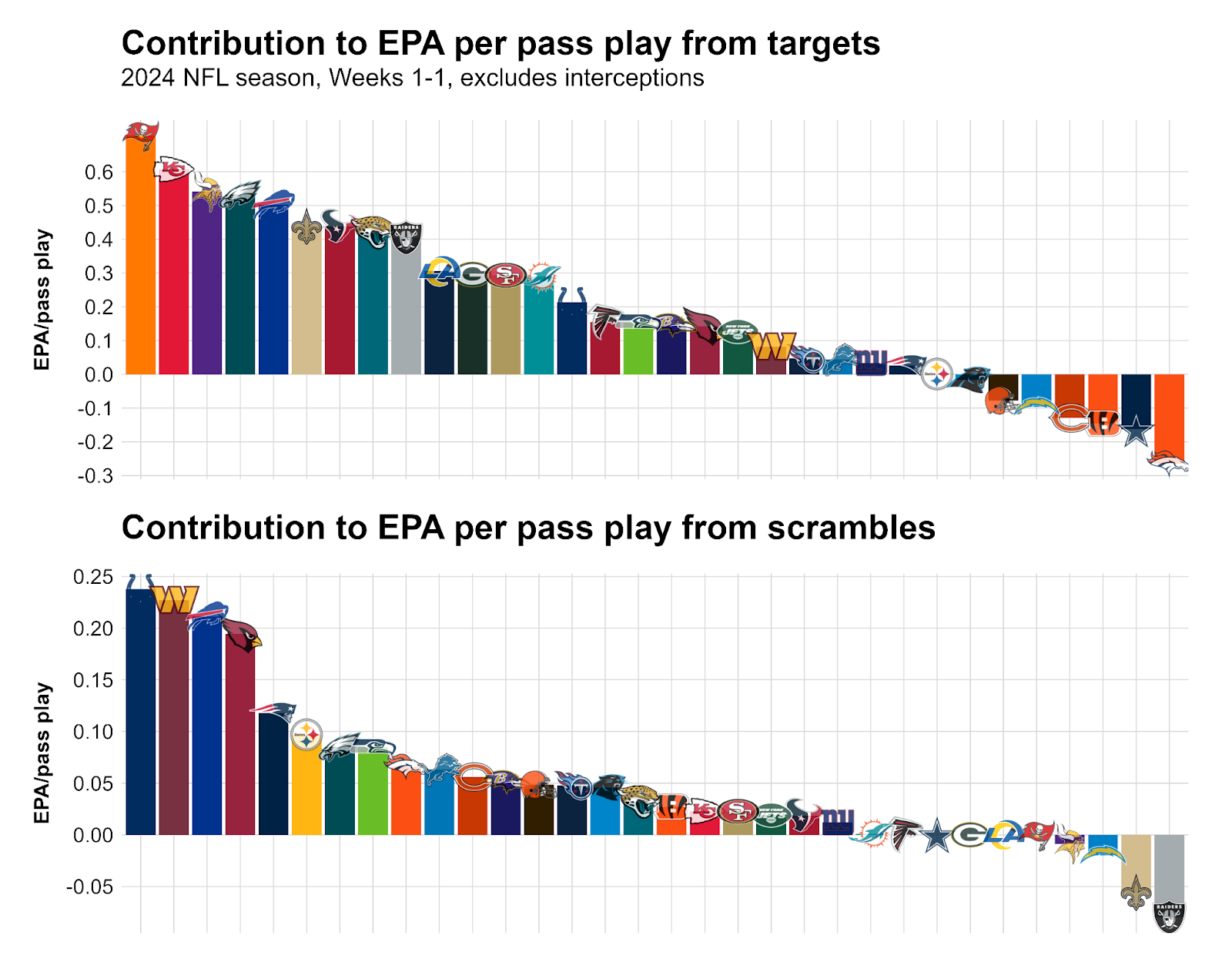
We also want to look at the contribution of each dropback outcome to each team’s overall passing efficiency.
Here is how much negative outcomes (sacks, throwaways and interceptions) contribute to each team’s total EPA per pass play numbers:
Here is how the mostly positive outcomes (targeted passes that aren’t intercepted and scrambles) contribute to each team’s passing efficiency:
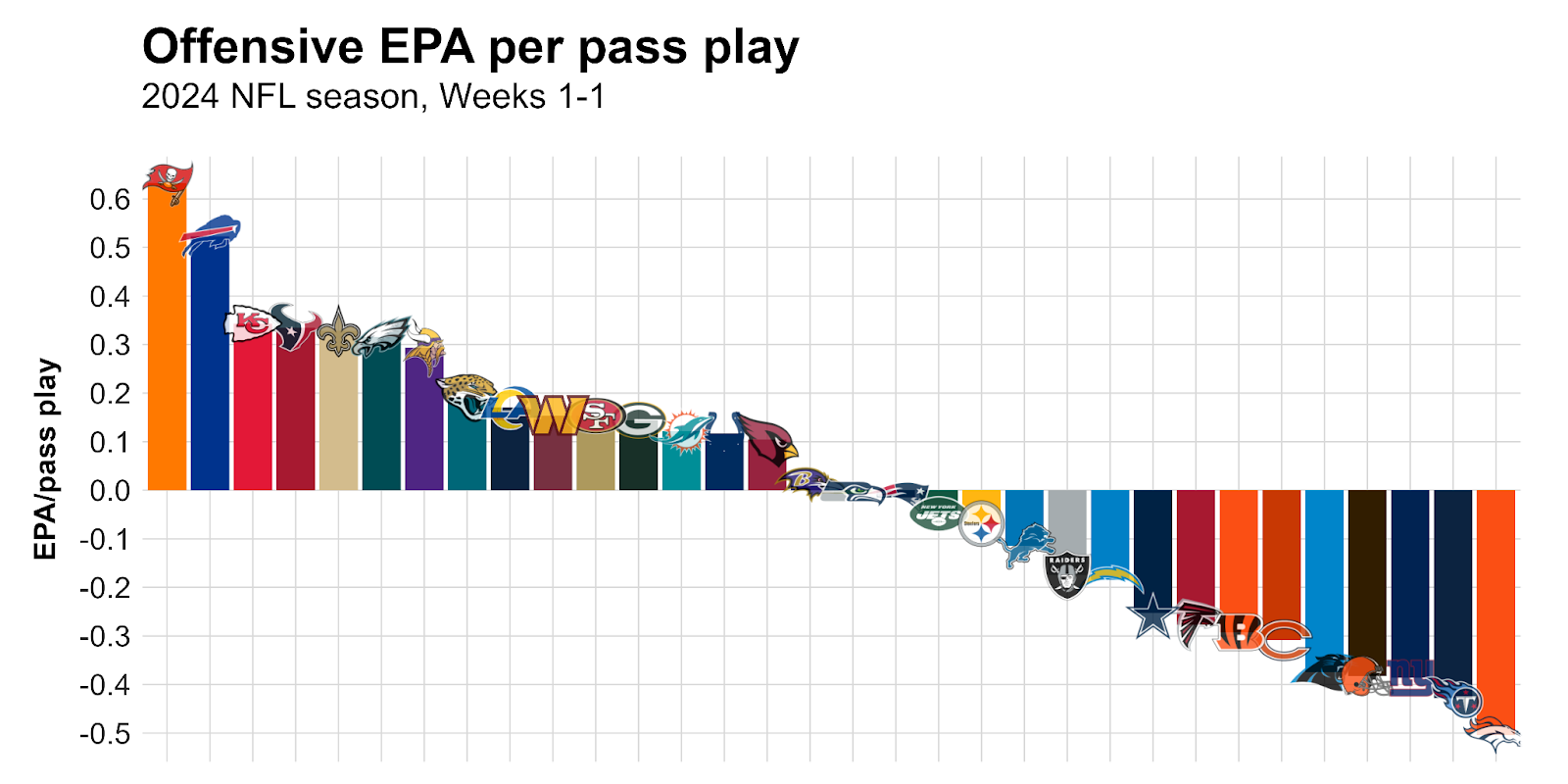
As an overall summary, here is each NFL team’s passing efficiency:
Special Teams & Turnovers
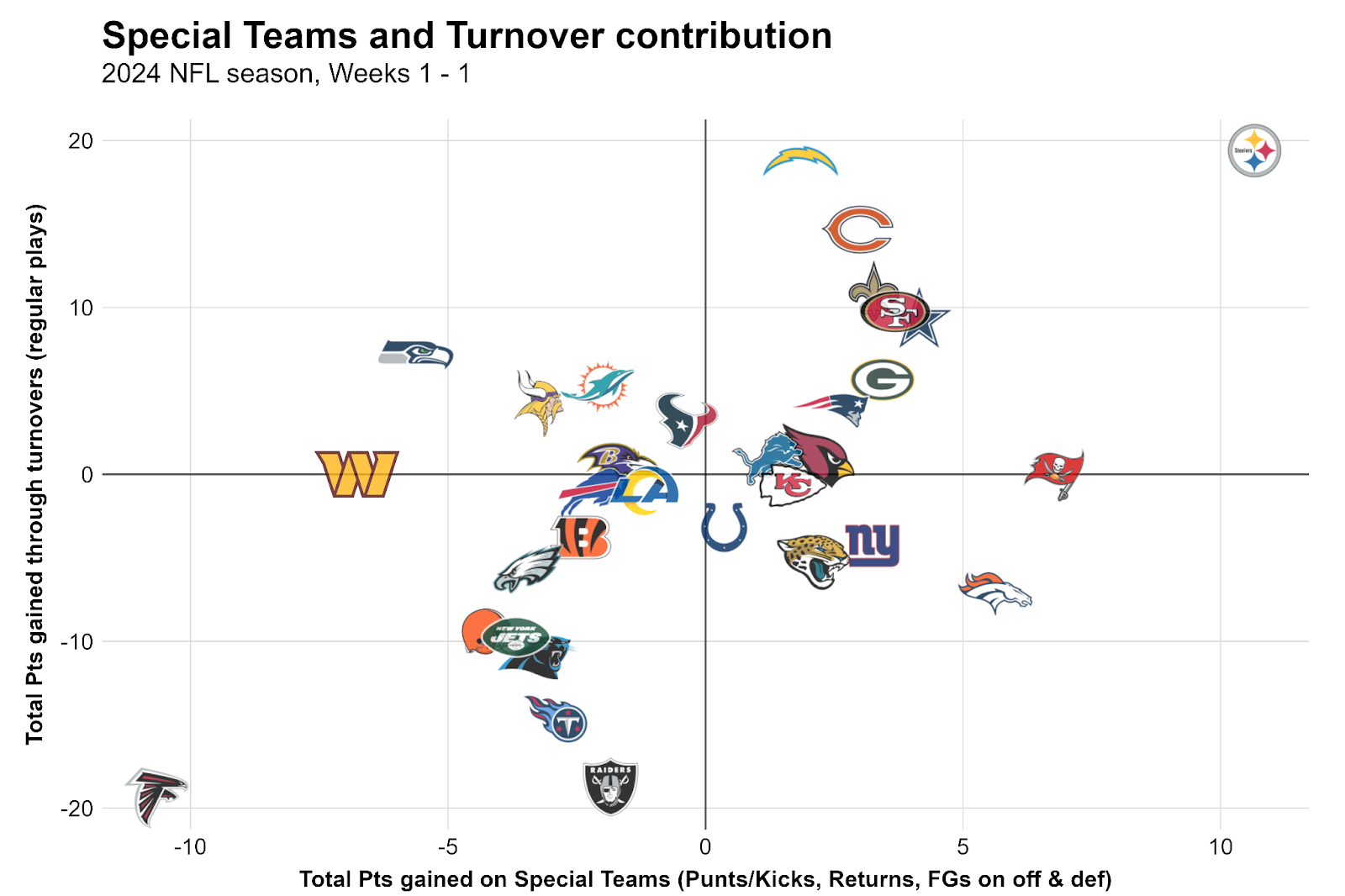
The following chart shows how many net points each team has gained through turnovers (gaining points through takeaways and losing points through giveaways) and special teams (all phases):
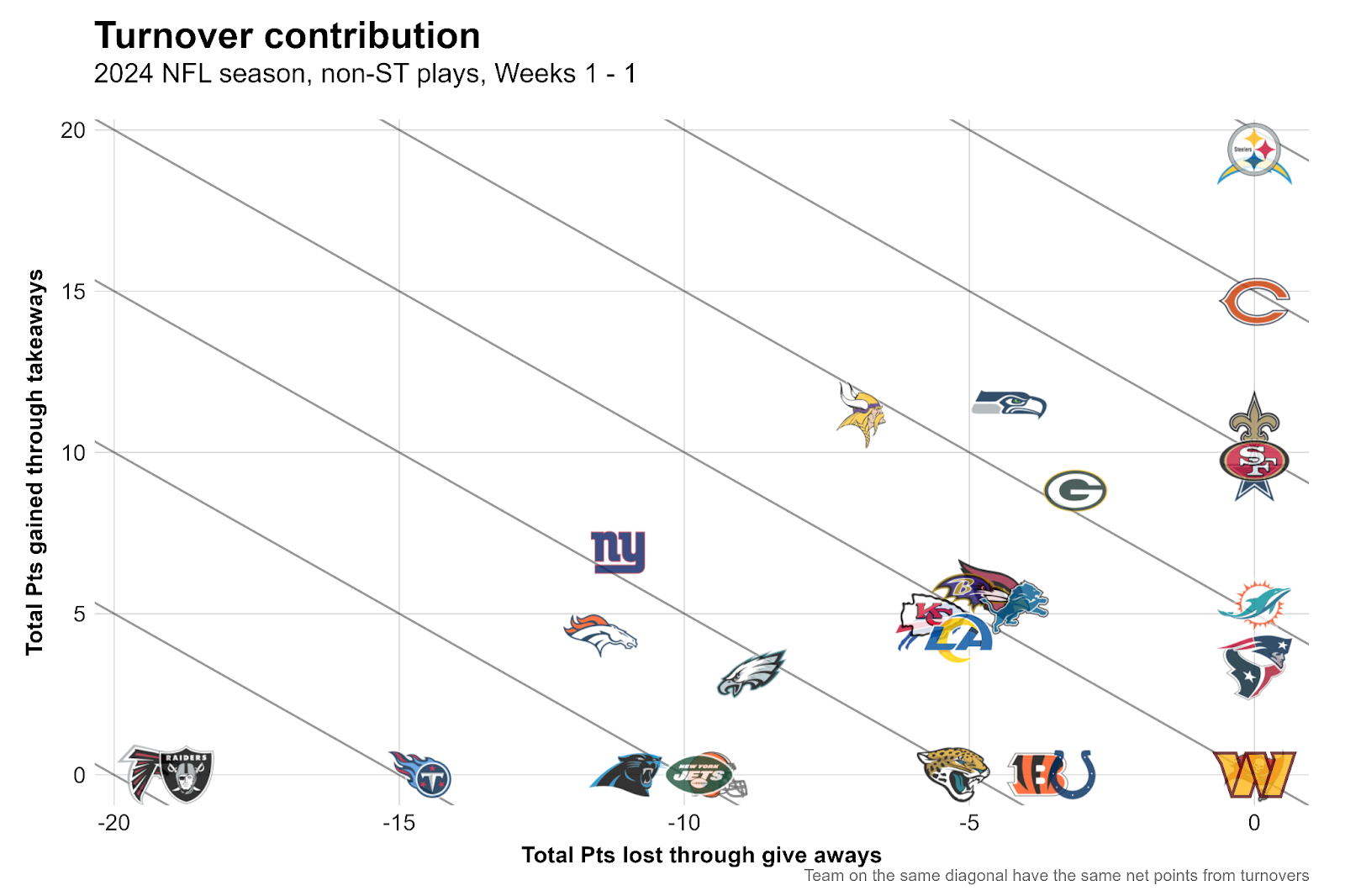
This chart looks at points gained and lost through takeaways and giveaways, respectively:
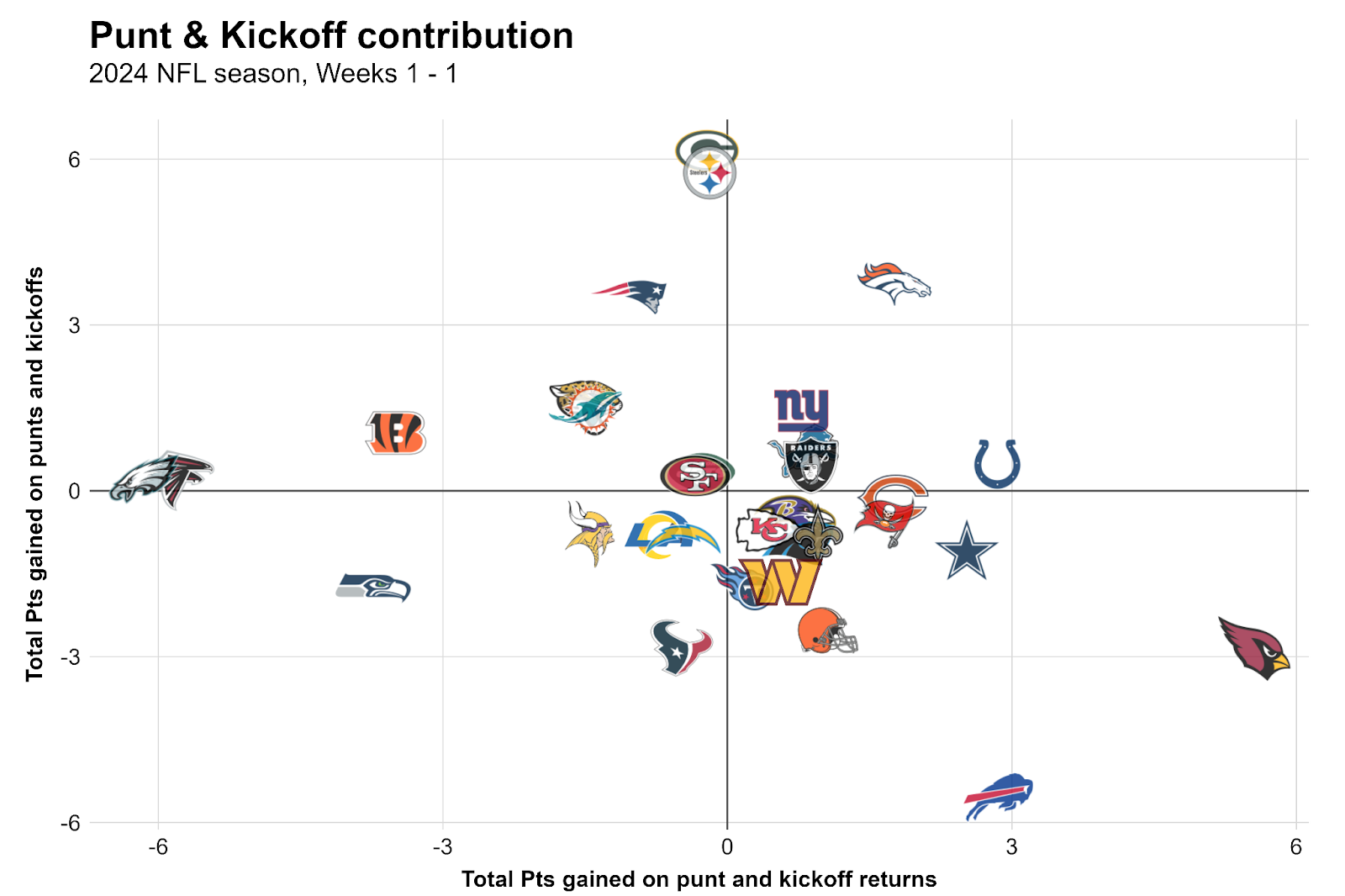
The below chart looks at punts and kickoffs, displaying how many net points teams gained through receiving them (X-axis) and kicking them (Y-axis):
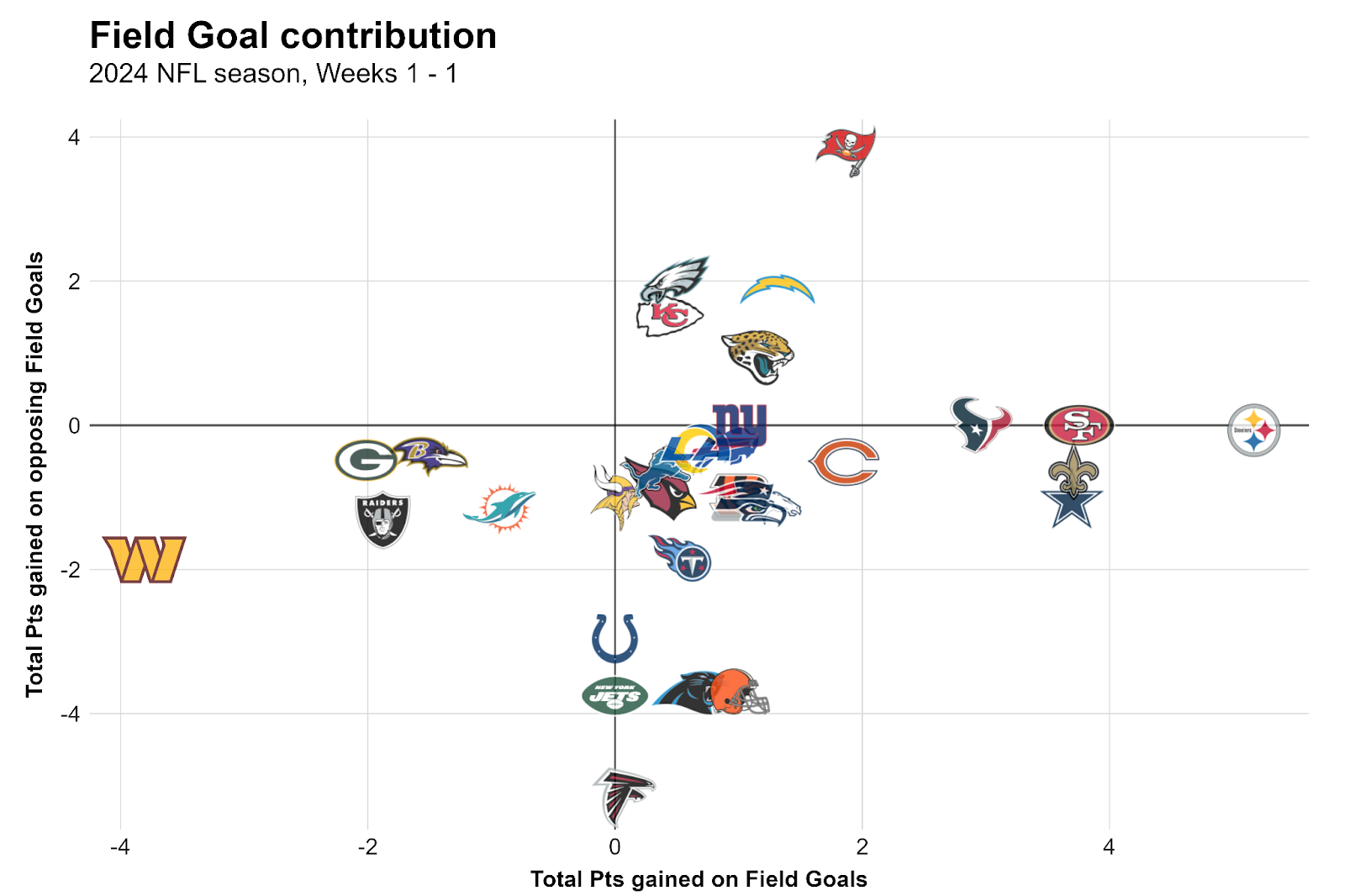
This chart looks at points over expectation (based on distance) on field goals. The X-axis describes kicking own field goals, while the Y-axis represents the opponent kicking field goals. This part is, of course, mostly luck-based, because most field goals are completely out of a defense’s control.