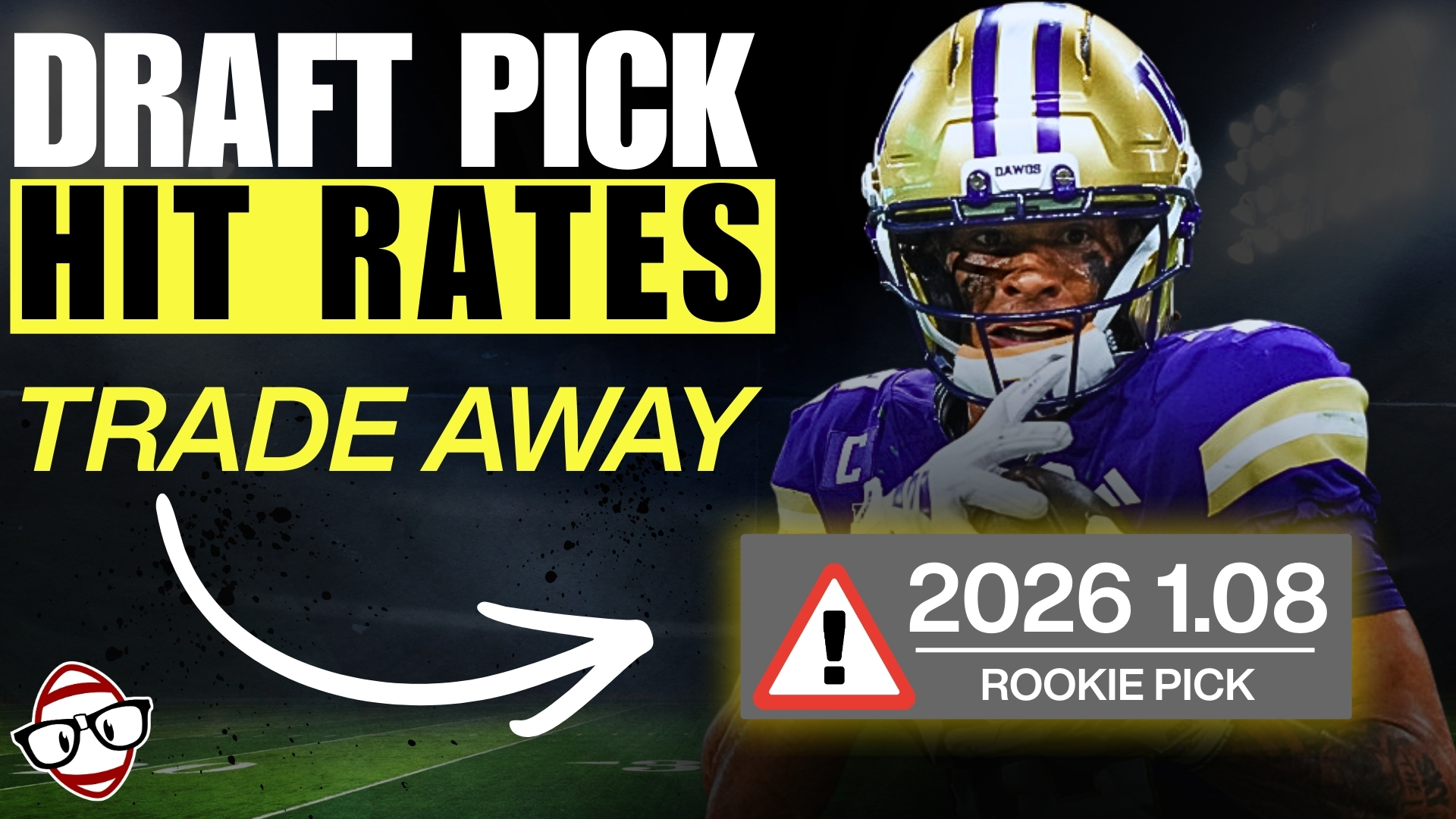
Rich Dotson and Garret Price are back for one of their most popular yearly shows: the real value of rookie draft picks. With the Combine running and rookie drafts right around the corner, they break down where picks actually hit, where they turn into roster cloggers, and why “not worth a first” is meaningless unless you say which first.
Listen to This Episode:
🎙️ Spotify
▶️ YouTube
The data behind “hits” and why the top matters
Garret lays out the scoring tiers they track to define outcomes. A “hit” requires at least one Tier 1 season, or multiple Tier 2 seasons, with thresholds adjusted by position. Quarterbacks need top six seasons to count as Tier 1, running backs and wide receivers need top 12, and tight ends need top three. The point is simple: if a player never reaches at least Tier 2, that pick never truly helped your starting lineup.
After adding the 2024 class to the spreadsheet, they call out early hits already logged, including Caleb Williams, Jayden Daniels, Malik Nabers, Drake Maye, Brock Bowers, Ladd McConkey, Brian Thomas Jr., and Bo Nix, while noting plenty of names still need time to prove it.
What the hit rates say about trading picks
The biggest takeaway is the stability at the very top. Since 2018, the 1.01 has a 100% hit rate in their sample, and top four picks hit about three quarters of the time, with even more value when you include “mid” outcomes. After that, the first round becomes far less differentiated, and they point out an odd recent trend where 1.09 to 1.12 has slightly better results than 1.05 to 1.08.
They dig into a possible reason: quarterbacks often get pushed into that 1.05 to 1.08 range in Superflex, and non-elite rookie quarterbacks are harder to “hit” by their definition. The broader lesson stays the same. Outside the top tier, it often makes sense to trade down, tier up into a proven veteran, or move picks into stronger future classes.
Why second round picks are the “Ponzi scheme”
They hammer the second round value drop. Once you get into the 2.01 to 2.12 range, the hit rate collapses, and third round picks become true dart throws. Their advice for contenders is aggressive: if you can turn a first into multiple years of a proven producer, that is usually the winning bet because many late firsts never become lineup players.
Late draft strategy: load up on running backs and tight ends
Garret also tests a theory about late rookie drafts. If you trade late seconds and thirds for multiple fourths and fifths, the position most likely to return value is running back. Late-round running backs can become “ships to shore” quickly when injuries hit, and that short window can still flip into future seconds. They add that tight ends are often pushed down by the community chasing wide receivers, which can create value pockets in the late second and early third.
Explore more tools and resources to stay ahead of your league.
📊 Rookie Big Boards
📝 Rookie Mock Drafts
📱 Dynasty Nerds App
🧱 IDP Hub
👉 Upgrade your strategy and dominate your dynasty league.
Start Using the Film Room Today!
FFPC: New Users: Use promo code NERDS for $25 off your first FFPC Orphan Team!