The full NCAA Tournament bracket has been released with UConn leading the way as No. 1 overall.
(Editor’s note: This is part of the Bracket Central Series, an inside look at the run-up to the men’s and women’s NCAA Tournaments, along with analysis and picks during the tournaments.)
March Madness is upon us.
Well, technically it began during a wild conference tournament season ahead of the NCAA Tournament. But now, we get the really good stuff. The Cinderellas. The players you hadn’t heard of before this week who are now household names. The buzzer-beaters. Ultimately, though, we all want to know who will be cutting down the nets in April. And so we present: the top 16 national title contenders in our NCAA Tournament Power Rankings.
We will update this ranking after every round and until the Final Four begins. If top-seeded teams fall, others will take their place. If some lower-seeded teams look stronger than expected, they’ll move up the list.
Who’s on top to start? Of course it’s Connecticut. Here’s a look at where things stand as we enter Thursday’s first round:
Loading
Try changing or resetting your filters to see more.
UConn earned the No. 1 overall seed in the NCAA Tournament and certainly has played like the best team in college basketball. The Huskies are one of four teams with at least 30 victories entering the tournament and have all the pieces to become the first repeat national champions since Florida in 2006-07.
Tristen Newton is an outstanding point guard who leads the team in scoring. Donovan Clingan is a block machine. Five players average double figures in scoring. UConn not only ranks No. 1 in adjusted offensive efficiency, according to KenPom, but is 11th in adjusted defensive efficiency.

Don’t let a 69-41 loss to Iowa State in the Big 12 championship game cloud what Houston achieved this season — and what the Cougars are capable of accomplishing over the next three weeks. Houston went 16-4 against Quad 1 opponents this season. No other team in the country won more than 13 games against Quad 1 opponents.
The Cougars have three players averaging double figures in scoring: L.J. Cryer (15.3 points), Jamal Shead (13.1 points) and Emanuel Sharp (12.2) points. There may not be a ton of depth due to some injuries this season, but the top end is as good as any team in the country.
Zach Edey, the 7-foot-4 center who is a two-time national player of the year, is an absolute load to handle. He fouled out three Wisconsin players attempting to guard him during a Big Ten tournament semifinal game. But what makes Purdue such a challenge is the number of threats that surround Edey.
Braden Smith is one of the top point guards in the country and can just as easily record 10 assists in a game as he can score 10 points. Lance Jones is a strong, athletic wing who is third on the team in scoring. Smith, Fletcher Loyer and Mason Gillis all shoot well over 40 percent from 3. Purdue’s previous postseason failures, including losing an opening-round game as a No. 1 seed last season, still cling to the program. But this group is hungry to prove this year will be different.
UNC still has the scoring prowess of RJ Davis, the ACC player of the year. It also still has Armando Bacot, who has a decreased offensive role but is averaging a double-double in points and rebounds for a third consecutive season. Also, the Tar Heels have reinvented themselves this season with the help of the transfer portal.
Stanford transfer Harrison Ingram and Notre Dame transfer Cormac Ryan rank third and fourth on the team in scoring. Elliot Cadeau, a freshman who reclassified to begin college a year early, gives North Carolina a steady presence at point guard.
If you’re looking for potential stars to watch in the NCAA Tournament, Dalton Knecht is a good one to follow. He won the Big Sky scoring title at Northern Colorado last season and has flourished on the big stage as a fifth-year senior, dropping 36 points on Georgia, 37 points on North Carolina, 39 points on Florida and Auburn and 40 points in his home finale against Kentucky.
Tennessee also has received excellent point guard play from Zakai Zeigler and has a formidable big man in Jonas Aidoo. Rick Barnes has his sixth NCAA Tournament team in nine seasons at Tennessee, and this one has real Final Four potential.
Arizona made its talent clear early this season by starting 8-0 with victories against eventual tournament teams Duke, Michigan State, Colgate and Wisconsin (an impressive 98-73 drubbing in Tucson). The Wildcats love to get up and down the floor and average 87.9 points per game, which ranks third nationally behind Alabama and Kentucky.
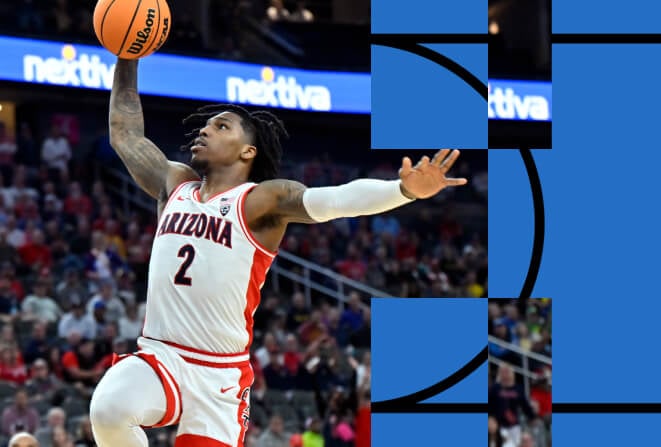
North Carolina transfer Caleb Love is the team’s leading scorer, but the Wildcats consistently get double-doubles from Oumar Ballo and have three players who have recorded more than 100 assists: Love, Pelle Larsson and Kylan Boswell.
The health of Tyler Kolek will go a long way toward determining Marquette’s NCAA Tournament fate. Kolek missed the final three games of the regular season and the Big East Tournament with an oblique injury, but coach Shaka Smart said he would be ready for the NCAA Tournament. Kolek is one of the best point guards in the country.
Marquette hasn’t made it out of the first weekend of the NCAA Tournament since Buzz Williams led the 2013-14 team to the Elite Eight. But this group, which has leading scorer Kam Jones, as well as Oso Ighodaro and Stevie Mitchell, among others, has a high ceiling — particularly if Kolek can quickly round back into form.
Iowa State, which was picked this preseason to finish seventh in the Big 12, has far surpassed expectations. The Cyclones have done so, in part, by playing smothering defense. Just ask Houston, which scored 41 points in a Big 12 tournament title game loss to Iowa State. The Cyclones rank second in the country in steals per game.
Iowa State isn’t a particularly great shooting team but does have four players averaging at least 10 points per game: Keshon Gilbert. Tamin Lipsey, Milan Momcilovic and Curtis Jones. T.J. Otzelberger has built a strong foundation for a program that, just three years ago before Otzelberger took over, went 2-22.
You want offensive versatility? How about the fact that Baylor has six players averaging double figures in scoring? The Bears are a top-10 3-point shooting team nationally and have legitimate future NBA lottery picks with leading scorer Ja’Kobe Walter and freshman Yves Missi.
Baylor lost two of its last three games heading into the NCAA Tournament and could stand to play with more consistency on defense. But there is a lot to like about this team with RayJ Dennis racking up assists.
Creighton has three players who likely would lead most teams in scoring: Baylor Scheierman, Trey Alexander and Ryan Kalkbrenner. All three players average at least 17 points per game. Scheierman is a lethal 3-point shooter and Kalkbrenner, a 7-foot-1 center, won Big East Defensive Player of the Year for a third consecutive season.
If there is an area of concern, it’s that Creighton doesn’t have a particularly deep bench. Francisco Farabello is the only reserve who averages more than 10 minutes per game. But when the starting group is clicking, the Blue Jays can hang with anyone.
Kentucky sure is an entertaining team to watch because of how well the Wildcats can score. They put up at least 100 points six times this season, including four times against SEC opponents. Of course, they’re also capable of giving up 100 and losing, as they did against Tennessee last month.
Antonio Reeves leads the team in scoring, but there are three other guards — Rob Dillingham, Reed Sheppard and D.J. Wagner — who can have big nights. This may not be John Calipari’s best Kentucky team, but it is still plenty dangerous.
Illinois, which finished second during the Big Ten regular season, won the conference tournament championship because Terrence Shannon Jr. put up otherworldly numbers: 28 points against Ohio State, a tournament-record 40 points against Nebraska and 34 points against Wisconsin. When the Illini need a bucket, as they did repeatedly against Wisconsin in the title game, they can confidently go to Shannon.
Marcus Domask, the team’s second-leading scorer, presents matchup problems because of his ability to shoot from outside but also to take defenders off the dribble and score on a variety of moves in the post. Coleman Hawkins may be the most versatile player on the team. He’s a 6-foot-10 forward who can make 3-pointers at a high rate, defend well and keep possessions alive with offensive rebounds.
It’s not surprising that Duke once again has a ton of talent on its roster. Each of the team’s top five scorers averages in double figures, and all were five-star prospects coming out of high school. Kyle Filipowski, a 7-foot sophomore center, averages more than 17 points per game.
Duke has been very good at times this season, including in wins against Michigan State and Baylor. The Blue Devils also lost their last two games entering the NCAA Tournament, against UNC to close the regular season and against NC State in the ACC tournament.
Auburn is the only team that ranks in the top 10 nationally in both adjusted offensive and defensive efficiency, according to KenPom. That means the Tigers get it done on both ends of the floor and rank in the top 10 in scoring margin.
Johni Broome and Jaylin Williams can present trouble for opponents in the frontcourt. But the Tigers also have the depth to wear out teams. Ten players average at least 13 minutes per game for Bruce Pearl.
No team in the country averages more points than Alabama, which is the Crimson Tide’s biggest advantage. They play fast, shoot more than 30 3-pointers a game and are entertaining to watch. Leading scorer Mark Sears not only shoots at a high rate from 3, but he also scores a good chunk of his points at the free-throw line.
For as much as Alabama scores, the Crimson Tide also give up plenty of points. Over its last six games entering the NCAA Tournament, Alabama surrendered more than 100 points three times, all losses — 117 to Kentucky, 105 to Florida and 102 to Florida in the SEC tournament.
Kansas has never entered the NCAA Tournament with 10 losses under Bill Self until this season. For a Jayhawks team that was the preseason No. 1 in the AP Top 25, it’s been a rollercoaster ride filled with more disappointment than usual.
How far the Jayhawks go will depend on how a starting unit with a short bench can perform. Kevin McCullar Jr., the team’s leading scorer this season, will miss the NCAA Tournament with a bone bruise in his knee.
The Bracket Central series is part of a partnership with E*TRADE.
The Athletic maintains full editorial independence. Partners have no control over or input into the reporting or editing process and do not review stories before publication.
(Photo of Caleb Love: David Becker / Getty Images)