Gonzaga’s move to the Pac-12 seems like a no-brainer.
The Zags, with their 25 consecutive NCAA Tournament appearances, have been operating as a high-major program in a mid-major league for years as the dominant member of the West Coast Conference. Now they’ll be a high-major program in … something different.
The new Pac-12 —in which San Diego State, Boise State, Colorado State, Fresno State and Utah State have joined Oregon State and Washington State’s rebuild efforts — isn’t on the level of the top five conferences in college basketball, but it will be much closer to that tier than any other. Call it mid-major-plus-plus in quality. Gonzaga helps narrow the gap to the top. Once the Big 12’s interest in the Bulldogs turned out to be just a tease, the Pac-12 appeared to be Gonzaga’s best option.
The move makes sense financially. New Pac-12 members will receive a 50 percent share of the NCAA Tournament unit money they bring in through how far they advance in the postseason, a payout system that rewards teams that are consistently good. Gonzaga actually got a higher share of NCAA Tournament units in the WCC, but joining a league that’s likely to have a more lucrative media rights deal, surrounded by leaguemates that have consistently performed better than their WCC counterparts, should equate to more money coming the program’s way.
The competitive implications are less clear-cut. In short, Gonzaga should actually get tested during its conference season in the Pac-12, and there can be reasonable debate about whether that’s a positive or a negative.
The Zags’ dominance has drawn critics who say their easy conference inflates their record and leaves them overrated entering March. The counterpoint: Why fix something that isn’t broken?
Gonzaga has won or shared the WCC regular-season title in 23 of the last 26 years. It has won the WCC conference tournament in 20 of the last 25 years. No school in college basketball owned its league like the Zags. The resources and funds of everyone else in the WCC are nowhere close to Gonzaga’s.
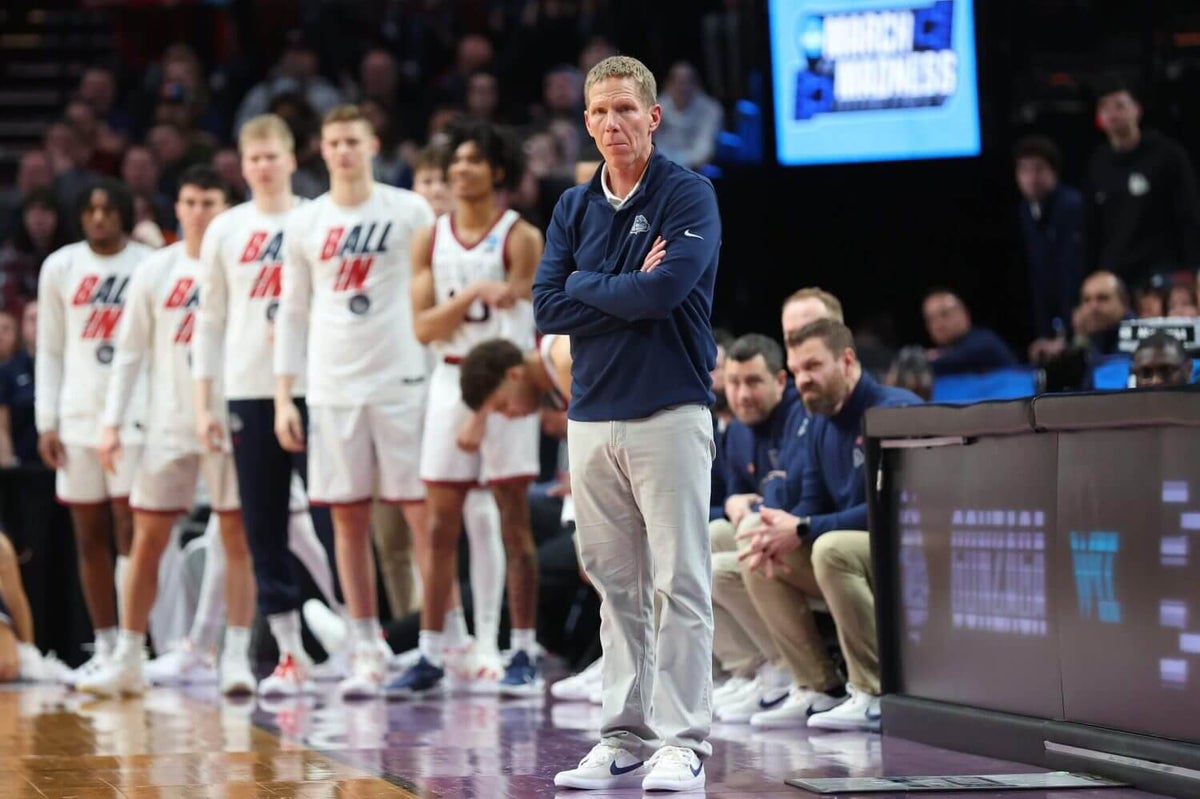
While other high-major teams battle for their lives in conference play, just trying to win games and make the NCAA Tournament or win the league, Gonzaga does not operate under that level of stress. Most years, head coach Mark Few has known he’s going to win the league and make the tournament. And because Gonzaga is so much better than everyone else in the WCC, it can simply focus on its own development during conference play. Few can play a deeper rotation, keeping his bench guys engaged and building their confidence, which also has the long-term benefits of helping with retention and accelerating the development process.
More importantly, Few can focus on his team’s weaknesses and try to improve those, rather than pouring resources into scouting and conference race survival mode. Last year, for instance, he tinkered with his lineup in mid-January, inserting a third front-line player in Ben Gregg, and it worked brilliantly. Gonzaga’s confidence was shaky after a 9-4 start. With Gregg in the lineup, the Zags got hot entering the NCAA Tournament and ended up making the Sweet 16.
The narrative that Gonzaga suffers in the postseason because it plays in such a weak league is proven ridiculous by simply looking at the results. Gonzaga has reached the Sweet 16 in nine consecutive tournaments — since the field expanded to 64 in 1985, only North Carolina and Duke have pulled off a run like that. That stretch includes two appearances in the national title game. In 17 of the last 24 NCAA Tournaments, Gonzaga has either played to its seeding or surpassed it. Gonzaga has the seventh-most NCAA Tournament wins in college basketball (43) since 2000.
Yes, Gonzaga has yet to win a national title. But that’s more about the randomness of a one-and-done tournament. Gonzaga was the better team in the 2017 national title game, and if a couple calls go its way in that game against North Carolina, it probably has its national title.
For quantifiable proof that the Zags actually benefit from playing in a weaker league, let’s take a look at some data. Gonzaga is coming off the best decade in program history and has arguably been the best team in college basketball over the last 10 years. The table below shows where Gonzaga ranked at Barttorvik.com each year at the end of its nonconference slate (NC rank) and then where Gonzaga ranked during the conference schedule, from the beginning of conference play through the end of conference tournaments (CS rank). These are all adjusted efficiency rankings, so quality of the opponent is factored into the equation.
| NC rank | CS rank | NCAA seed | Finish | |
|---|---|---|---|---|
|
2015 |
5th |
9th |
2 |
Elite Eight |
|
2016 |
20th |
22nd |
11 |
Sweet 16 |
|
2017 |
3rd |
1st |
1 |
Lost national championship |
|
2018 |
17th |
9th |
4 |
Sweet 16 |
|
2019 |
7th |
1st |
1 |
Elite Eight |
|
2020 |
9th |
3rd |
N/A |
Canceled due to pandemic |
|
2021 |
3rd |
1st |
1 |
Lost national championship |
|
2022 |
3rd |
1st |
1 |
Sweet 16 |
|
2023 |
18th |
7th |
3 |
Elite Eight |
|
2024 |
19th |
13th |
5 |
Sweet 16 |
Gonzaga performed better during the conference portion of its schedule eight out of 10 times. And breaking that adjusted efficiency ranking down by the Zags’ offensive and defensive efficiency ratings appears to point toward Gonzaga’s skill in identifying areas with room for improvement and turning a weakness into a strength.
| NC ADJ OE rank | CS ADJ OE rank | CS ADJ DE rank | NC ADJ DE rank | |
|---|---|---|---|---|
|
2015 |
2 |
10 |
28 |
34 |
|
2016 |
74 |
7 |
12 |
81 |
|
2017 |
15 |
12 |
5 |
3 |
|
2018 |
7 |
17 |
65 |
13 |
|
2019 |
1 |
2 |
65 |
5 |
|
2020 |
1 |
2 |
78 |
32 |
|
2021 |
1 |
1 |
52 |
6 |
|
2022 |
4 |
2 |
12 |
5 |
|
2023 |
7 |
1 |
80 |
98 |
|
2024 |
33 |
5 |
31 |
70 |
Now let’s look at the program that has been Gonzaga’s closest equal this decade in terms of consistency: Kansas. The Jayhawks have also made the NCAA Tournament every year this century, have the most tourney wins since 2000 (59) and have dominated their conference, albeit a much more difficult one.
| NC rank | CS rank | NCAA seed | Finish | |
|---|---|---|---|---|
|
2015 |
24th |
9th |
2 |
Round of 32 |
|
2016 |
4th |
2nd |
1 |
Elite Eight |
|
2017 |
6th |
13th |
1 |
Elite Eight |
|
2018 |
3rd |
15th |
1 |
Final Four |
|
2019 |
14th |
21st |
4 |
Round of 32 |
|
2020 |
1st |
3rd |
N/A |
Canceled due to pandemic |
|
2021 |
49th |
20th |
3 |
Round of 32 |
|
2022 |
5th |
3rd |
1 |
National champion |
|
2023 |
7th |
18th |
1 |
Round of 32 |
|
2024 |
16th |
18th |
4 |
Round of 32 |
The narrative around Bill Self-coached teams is that they always improve during Christmas break. Kansas won or shared the Big 12 title seven times in those 10 years, yet Self’s team regressed according to the numbers six out of 10 seasons.
And when the Jayhawks had a weakness on one end of the floor, the numbers suggest it was more difficult for Self to address that during the conference season.
| NC ADJ OE rank | CS ADJ OE rank | CS ADJ DE rank | NC ADJ DE rank | |
|---|---|---|---|---|
|
2015 |
22 |
33 |
58 |
4 |
|
2016 |
10 |
5 |
8 |
9 |
|
2017 |
7 |
10 |
22 |
43 |
|
2018 |
8 |
5 |
6 |
83 |
|
2019 |
28 |
35 |
20 |
18 |
|
2020 |
8 |
10 |
3 |
3 |
|
2021 |
78 |
55 |
51 |
8 |
|
2022 |
2 |
6 |
52 |
20 |
|
2023 |
20 |
42 |
13 |
13 |
|
2024 |
49 |
51 |
11 |
10 |
In the Pac-12, Gonzaga won’t suddenly step into Kansas’ shoes. The Bulldogs will still be the class of their new league, and the gap to No. 2 will be wider than the one Kansas has historically enjoyed in the Big 12. But if the rebuilt Pac-12’s programs were arranged in tiers of talent, at least one team will be just one tier below Gonzaga (San Diego State) and others will be within a few tiers, rather than the current situation in the WCC, where Gonzaga sits atop a mountain and the others are at sea level.
Of course, Gonzaga’s biggest advantage is the quality of the team Few puts together each year. Where the program goes in the next decade will depend much more on the performance of Few’s handpicked successor, assistant Brian Michaelson, and the Zags’ success in talent acquisition. It’s still too early to adequately evaluate the departure of former head-coach-in-waiting Tommy Lloyd, who was Gonzaga’s ace international recruiter before leaving to become Arizona’s head coach in 2021, but it’s worth noting Gonzaga hasn’t landed an impactful player from overseas since.
But as Gonzaga’s brand has become sexier, it has recruited at a higher level in the States, pulling in five-stars like Jalen Suggs and Chet Holmgren. Gonzaga has also done very well in the transfer portal. And the WCC never impaired its ability to recruit anywhere. Few could still sell that Gonzaga would play a high-profile nonconference schedule and would play in March.
The WCC tournament also afforded Gonzaga had the power to play games on its terms. From 2003 through 2013, the conference’s top two seeds got a bye all the way into the WCC tournament semis. After a five-year period in which Gonzaga had to return to playing at least three games to win the WCC tourney, the league introduced a double-bye that allowed its top two seeds a spot in the semis again. That led to the Zags being one of the most well-rested contenders in the country entering the NCAA Tournament. They may not receive that simple of a path in the Pac-12, depending on the final size of its basketball league.
Although Gonzaga’s WCC exit has often felt inevitable, the school stayed loyal for more years than many expected, while others jumped at every opportunity in the conference realignment popularity contest. As the Zags adjust to a new league, all the advantages their old one provided may become clearer than ever.
(Photo: Abbie Parr / Getty Images)