Welcome to article three of my four-part Dynasty Commissioner Series. So far, we’ve talked about building the perfect dynasty league and ways to spice up interaction and engagement within your league. But maybe you’re bored with the traditional dynasty format. Maybe you’re looking for a new challenge as a commissioner—or even as a league manager.
In this article, we’ll discuss some truly unique types of dynasty leagues that are not for the faint of heart. These leagues can be challenging to set up and may take some tweaking during the first season, but they often become some of the most enjoyable and memorable leagues you’ll ever play in.
Like the previous articles, these league ideas build on the foundation laid for creating the perfect dynasty league. You’ll want committed managers who are passionate about dynasty fantasy football and willing to embrace something different. These formats require buy in from everyone involved, but the payoff can be well worth it.
Here are 13 unique dynasty leagues that I personally run. Some will reignite your excitement for dynasty fantasy football, while others might make your head spin. Once you read the article, click on these links for the standard bylaws for each league.
🔗 Build Your Dynasty
32 Man League | Rivals League | Real NFL Coach League | Delay Dynasty | Game of Fantasy | Civilization League | Coordinator League | Something Different League | Premier Dynasty | Multiverse Leagues | Mario Kart | Pokemon | Race to the Infinity Gauntlet
32 Team League
You may have seen an article of mine about playing in expanded leagues with 32 managers. In these leagues, you essentially play as the real-life NFL. If you work hard enough as a commissioner, you can find 32 different managers to fill the league.
These leagues can be a ton of fun, especially when it comes to trading. In fact, my 32-team league is among the most active trading leagues I’ve been a part of. The best way to set them up is to let each manager choose an NFL franchise, then allow trading to begin immediately.
As a commissioner, you need to stay heavily involved. When teams struggle, some managers may lose interest or leave the league. Because of that, it’s important to stay on top of league activity and keep managers engaged throughout the season and offseason.
I highly recommend using IDP (Individual Defensive Players) in these leagues. IDP helps balance rosters and prevents teams from being completely dependent on elite offensive players. It also creates a much deeper player pool and gives rebuilding teams more ways to stay competitive.
Important Tips
- Follow an NFL-Style Schedule: Teams should play 6 games against their division rivals and 7 games against teams that mirrored their division finish from the previous season. For example, if you finished 1st in your division last year, you would play the other teams that finished 1st in their divisions. If you finished 2nd, you would play the other 2nd-place teams, and so on. This schedule would run from Weeks 1-13.
- Start the Playoffs in Week 14: Yes, this will involve bye weeks, but it allows more teams to stay in the playoff hunt throughout the season. Structure the playoffs with 7 teams from each conference, consisting of 4 division winners and 3 Wild Card teams.
- Use Heavy IDP Scoring: IDP scoring should heavily reward tackles. This makes defensive players the foundation of roster building, while offensive players become more of a luxury as teams prepare to compete. Proper IDP scoring helps balance the league and creates a more realistic NFL-style experience.
- Use Week 13 as your Max Points Draft Order: Instead of Week 14, when half the league is out.
Rivals League
A Rivals League is about as simple as it sounds. In a normal 12-team league (though it can work with any league size), every manager is assigned a rival for the season.
- You play your rival four times throughout the year.
- Every time you beat your rival, you earn a perk, or you can choose to sabotage your rival for the following week.
The key to making this league work is having a loud, active, and competitive group of managers. The more the rivalry grows throughout the season, the funnier and more entertaining the league becomes. Trash talk reaches another level when every matchup against your rival has consequences beyond just a win or loss.
This is one of the easiest league concepts to implement because it can be added to almost any existing dynasty or redraft league without changing the core league structure. All it takes is assigning rivals and creating a list of perks and sabotages for managers to use throughout the season.
Possible Rival Rewards
- First Two Rival Wins: For your first and second wins against your rival, you earn the ability to adjust your rival’s lineup for the following week.
- Third Rival Win: If you defeat your rival for a third time, you earn the right to borrow one player from their roster for a single week. This borrowed player can be inserted into your lineup and then returns to your rival’s team afterward.
- Fourth Rival Win: If you complete the season sweep and win all four rivalry matchups, you earn the ultimate reward—you may permanently take one player from your rival’s roster. To keep things fair, each team can protect its top 14 players, meaning the stolen player must come from the remaining portion of the roster.
Real NFL Coach League
This can be a fun but extremely challenging league to stay on top of, while still being fairly easy for the commissioner to run.
The concept is simple: this league mirrors the reality of being an NFL head coach. We all know it’s difficult to win in the NFL, but it’s even harder to keep your job for a long period of time. In this format, managers must continue winning in order to remain in the league—or risk getting fired.
The pressure creates a completely different dynamic from that of a traditional dynasty league. Managers who are on the hot seat may make aggressive trades, sacrifice future assets, or go all-in to save their jobs for another season.
I currently run two versions of this league, with each one handling the firing process a little differently. Both formats pose a unique challenge in which survival can sometimes be just as important as winning a championship.
The Real NFL Coach League isn’t for everyone, as it involves less rebuilding, but for managers who enjoy high stakes and constant pressure, it can be one of the most entertaining dynasty formats you’ll ever play.
Possible NFL League Requirements
- In order to not get fired, you must make the playoffs at least once every 2 years and make the league finals at least once every 6 years.
- If you fail to meet either requirement, you are fired and a new manager takes over the team.
- My other version of this league is a little less strict. In that league, you only need to make the playoffs once every 3 years to keep your job.
- The 3-year version tends to have lower turnover than the league that requires a playoff appearance every 2 years.

Delay Dynasty
Delay Dynasty is a newer format one that I started two years ago. The concept behind this league is exactly how it sounds: your dynasty career is delayed, as in you don’t build your team overnight.
Instead of having a full team of players to choose from, you only have a rookie draft during the startup. So you draft only rookies from that year and beyond. For example, if the league starts in 2026, then only 2026 rookies and future rookie classes can be used.
That means players like Josh Allen, Drake Maye, or Ja’Marr Chase would remain on waivers forever and never be used by teams. You only start your league with players from the current rookie year and forward.
Important Tips
- Normally you start off with just 1 starting spot, and you slowly build out a full starting lineup as the years go on.
- You should try to balance the scoring so that non-QB positions receive a boost in scoring.
- Veterans remain on waivers, so it’s the commissioner’s responsibility to make sure managers know which years of experience are eligible to be picked up each season.
Game of Fantasy
Game of Fantasy is a Game of Thrones-themed dynasty league. The idea behind the league is to reward the family that is able to beat everyone else down and ultimately claim the kingdom.
To start, split the league into four families with three managers on each team. As an added bonus, have managers change their team names to fit the theme. It helps with immersion and makes the league feel more like the world of Westeros.
This league took some trial and error to get right, but we eventually found a sweet spot that keeps the league competitive while still embracing the family-versus-family concept. Managers are not only competing for individual success but also trying to help their family gain control of the kingdom.
The playoffs are done by allowing the family with the best combined regular-season record to have all three members make the playoffs. The remaining playoff spots go to the manager with the best record from each of the other families. The family that wins the league ends up with the 4th, 5th, and 6th rookie draft picks the following year. You can adjust this as you like. We originally used the 1st, 2nd, and 3rd picks, but that made some families too top-heavy and created a larger gap between the contenders and everyone else.
Important Tips
- Allow families to trade with each other throughout the season, but make a rule that once a player is traded within of the family, that player cannot be traded back to the same family member.
Civilization League
Civilization can be a fun but tricky league to play in. The premise of the league is to start with almost nothing and slowly build up your civilization over time.
The way we started was with a blind free-agent waviers using FAAB and smaller rosters. Because of that, some teams will end up with elite lineups while plenty of talent remains on waivers for managers to pick up throughout the season.
One important rule is that managers must field a full starting lineup every week during the first season. This prevents teams from simply hoarding players and forces managers to make trades or use the waiver wire in order to stay competitive.
Each season, the winner gets to create three different league changes. These can be lineup changes, scoring adjustments, or overall league rule changes that shape the future of the civilization.
I would suggest perhaps following an era format instead of allowing the winner to choose the new rules each season. Lay out a 10-year plan for the league, with a new era beginning every two years. Each era can introduce different scoring settings, lineup formats, roster sizes, or league mechanics that reflect the growth of the civilization.
For example, the early years could focus on survival with small rosters and limited starting lineups, while later eras introduce larger rosters, rookie drafts, superflex, premium scoring, or other advanced dynasty features. Based on my experience, this approach works better for the league’s competitive balance because every manager knows what changes are coming and can plan accordingly, rather than having the direction of the league determined by whoever wins the championship each year.
Important Tips
- In the blind free-agent waivers, limit the number of bids managers can put in each day. It helps keep the league more balanced in the first year, especially since there will still be a lot of talent available on waivers.
Coordinator League
Our Coordinators League is meant to rely on a partner, just like in the NFL. If the offense struggles, then the defense picks up the slack, and vice versa.
We have this set up as two separate leagues—one for offensive players and another with only IDP players. It’s a fun league, but it’s harder to manage since you need 24 managers to make it work.
Realistically, you want managers to find a partner they trust in order to truly have a competitive league. That way, you don’t have to worry about a random manager going inactive and hurting another player’s team.
For the regular season, you mainly play as a normal league. However, teams make the playoffs based on the combined record of both the OC and DC teams, which requires using a spreadsheet to track everything.
In the playoffs, it’s not OC vs. OC or DC vs. DC. Instead, the best two units advance each round based on the combined scores of both the OC and DC teams.
This league can be a lot of fun to watch as one coordinator dominates while the other is fighting to help their partner reach the playoffs. It creates a unique team dynamic that you don’t see in most dynasty leagues.
Important Tips
- I’d recommend not allowing users to co-manage teams. The whole point of the league is to truly rely on your partner and not have access to make pickups, set lineups, or negotiate trades for the other team.
Something Different
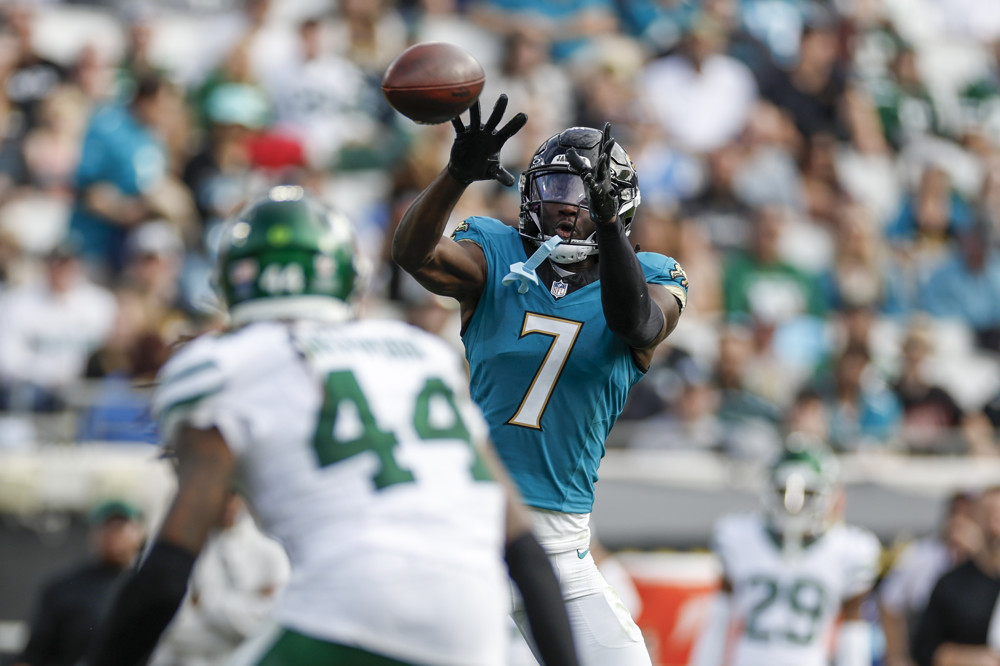
You may have heard of this concept before, but instead of drafting or picking individual players, you own positional groups from NFL teams. For example, you could have the entire Jaguars receiving group on your dynasty team, which would include Brian Thomas Jr., Parker Washington, Jakobi Meyers, and Travis Hunter. Everyone on your roster is based on that NFL team’s positional group.
If Brian Thomas Jr. gets traded, then you lose Brian Thomas Jr. from your dynasty team. However, if the Jaguars draft an elite rookie wide receiver, then you gain that player. It works both ways and creates a unique challenge when building your roster.
It’s a normal setup where teams have 2 QB groups, 2 RB groups, 2 WR groups, and 2 TE groups on their roster. We also play with 2 team defenses. This year, we added an extra skill-position spot (RB, WR, or TE) to help make teams more competitive and improve league balance.
The reason for that change is because our waiver system is very limited. You can only pick up players that fall within the positional groups you already own. We have also allowed three waiver moves during the season where managers can pick up a player as a one-week rental.
It took us some time to get this league into a place where it could be fun and balanced, but once everything clicked, the competition has been a lot of fun to watch. The NFL offseason becomes even more important because every trade, free-agent signing, and draft pick can directly impact the value of your positional groups.
Important Tips
- We do an auction draft after the NFL Draft that allows managers to swap positional groups through the auction process.
- FAAB is very important in this league, as the same FAAB you use during the season is also needed for the auction draft. You don’t just receive a fresh amount once the auction starts.
- At the end of the season, instead of rookie picks gaining value, teams receive extra FAAB based on their finish. The last-place team gets significantly more FAAB than the league champion, helping balance the league from year to year.
- As an added bonus, we do a one-round midseason draft based on standings that allows each team to make one positional-group swap. This gives struggling teams another chance to improve while adding another strategic layer to the league.
Premier Dynasty
The Premier Dynasty League is a format you may have heard of that involves promotion and relegation of teams, similar to the Premier League soccer system. There are several ways to set it up, whether as multiple leagues or one league split into divisions. Personally, I find running it as one league to be much easier.
My setup is a 14-manager league split into 2 divisions of 7 teams each. The top division is the Premier League, while the bottom division is the Championship League. In Year 1, the league is played as a normal dynasty league. At the end of the season, the standings determine which seven teams make the Premier League and which seven teams make the Championship League going forward.
Each year, teams are promoted and relegated between the two divisions. In the Premier League, the team that finishes last in the standings is relegated to the Championship League for the following season. The Premier League teams compete for the majority of the prize pool and the league championship.
Meanwhile, the Championship League has its own playoff bracket, essentially serving as a promotion tournament. The winner of that bracket earns promotion to the Premier League for the next season.
It’s a fun format because the competition is fierce at every level. Teams in the Premier League are fighting to avoid relegation while chasing the championship prize, and teams in the Championship League are battling for a chance to move up. In my league, the Championship winner receives double their league entry fee, while the rest of the prize pool is reserved for the Premier League champion. This creates meaningful stakes for every team, regardless of which division they are in.
Important Tips
- We set up our league to have two teams promoted each year: the team with the best regular season record in the Championship Division and the Championship playoff winner.
- If two teams get promoted, then two teams need to be relegated from the Premier Division. The team with the lowest regular season record in the Premier Division is automatically relegated.
- The second relegation spot is determined by a matchup between the two Premier Division teams that lose in the first round of the playoffs. They battle it out to stay in the Premier Division, with the loser being relegated.
- Set up the regular season schedule so teams primarily play opponents within their own division rather than the entire league. This helps make the divisional standings and promotion/relegation races feel more meaningful throughout the season.
- Make the Premier Division prize pool significantly larger than the Championship Division prize pool. This gives managers extra motivation to earn promotion and avoid relegation.
Multiverse Leagues
A Multiverse League is a fun concept if you are interested in trying many different starting lineup setups, scoring systems, or overall league settings but aren’t sure which ones will work long term.
In a Multiverse League, the settings change from year to year. One season, you may play in a Superflex format, while the next season could require starting three running backs. Another year might be full PPR, TE Premium, or some other unique scoring setup. The possibilities are nearly endless.
While it can be difficult to fully commit to a rebuild or a win-now strategy because the league environment is always changing, that is part of the challenge. Managers have to adapt their rosters to fit each new “world” or season. Some teams may be built perfectly for one format but struggle in the next, while others rise to the top when the settings shift in their favor.
The constant changes help keep the league competitive and active, as managers are always preparing for the next version of the league and trying to build a roster capable of surviving across multiple worlds.
Important Tips
- You should allow managers to know the next 2 years of worlds in advance so they can plan their roster builds and trades accordingly.
- Scoring Settings – TE Prem, PPR, Points Per Carry, 6 Pass TD, Yardage Bonus, 1st Down Bonus, etc.
- Draft Settings – Change how the rookie draft order is determined, when the rookie draft takes place, using a lottery system, and more.
- Roster Settings – Superflex, 1 QB, 3 WRs, All Flex Lineup, 2 TEs, 2 QB, IDP Formats
- You can create as many setting changes for each world as you find interesting. The more unique each world feels, the more managers will need to adapt their roster-building strategies from year to year.
Mario Kart
I started a Mario Kart league last year, and it was a ton of fun. Unless you aren’t a video game fan, you likely know Mario Kart. For those unfamiliar: it’s video game characters racing karts. Another way to look at this league is like NASCAR. In both situations, you receive a point total based on how you finish the race. The higher you finish, the more points you receive, and the lower you finish, the fewer points you receive.
That is the basis of the league, which makes it easy to maintain as a commissioner. Instead of head-to-head matchups, you need a spreadsheet tracking each person’s weekly finish and assign points based on where they placed each week. That is how you decide playoff teams and draft order.
Now where things get intense for commissioners is when you use more of the Mario Kart settings by incorporating items. In Mario Kart, racers gain randomized items that can help them during a race. Ideally, you get better items the further away you are from 1st place.
The way our league does it is you get an item based on how you finished that week. These items could help you move up a few spots or hurt someone else and push them down a few spots.
Once you get to the playoffs, it continues to not be a head-to-head matchup. Instead, it becomes a 3-week race to find out who is the best racer.
Important Tips
- Do a live show revealing who gets items each week. You’ll need to create a spreadsheet to keep track of all the items and who currently owns them.
- Have a strict cutoff for when managers can use items, as you only have a small window between weeks to process everything.
- Try to have many different types of items that do different things. The more variety you have, the more fun and unpredictable the league becomes.
- Also do a loser-bracket race for an extra draft pick to keep eliminated teams involved throughout the season.
- Make sure every item is clearly explained in the bylaws so there is no confusion when managers use them.
- Keep some items rare and powerful while others are more common, similar to how Mario Kart balances its item system.
The Pokemon League
Now the Pokémon League is newer to me, as this will be my first year doing it. I’ve seen different variations of this newer type of league. I made mine a little simpler so it’s not completely insane—tho, it’s still pretty crazy.
The overall objective of the league is to crown a World Champion. To get a World Champion, you first need four Regional Champions to compete and determine who is the best of the best.
In a normal regional season (we switch regions each year), you play a standard fantasy season and the winner of that season becomes that region’s champion and earns an entry into the World Championship. We continue doing that until we have four different Regional Champions.
A World Championship season is also another regional season, but the difference comes in the playoffs. The four Regional Champions compete for the World Championship title and majority of the league pot over the years, while the other six playoff teams compete for that season’s Regional Championship and a spot in the next World Championship a few years down the road.
One of the more interesting twists is that each region gives certain NFL teams either a bonus, a penalty (or no adjustment at all). This gets determined by randomly assigning every NFL team a Pokémon type (Water, Fire, Grass, Electric, etc.). In each region, certain Pokémon types receive a boost while others experience weaknesses.
For example, the Arizona Cardinals received a +5 point boost in our first region. That means every Cardinals player you start gives you an additional five points toward your weekly score. Meanwhile, the Houston Texans receive a -3 point penalty to your score. Every region is different, and eventually there will be a region where the Cardinals are at a disadvantage and the Texans are receiving the boost.
Another unique twist is that this is more of a keeper-dynasty hybrid than a true dynasty league. We are only allowed to keep a certain number of players each offseason:
- 6 veteran players
- 2 rookies (1 from one rookie class and 1 from another)
- Anyone currently on your taxi squad
After keepers are selected, we hold a veteran draft during the offseason and still conduct a rookie draft as well.
It’s a first-year process, so we’ll see how it goes, but the concept has me excited. Check back in a few years to see if this crazy idea actually works.
Important Notes
- Have every manager assigned a rival that they play twice during the season. If you beat your rival in both matchups, you get a pick swap with them.
- Assign every manager a Pokémon name to represent their franchise. It adds another fun layer to the league and helps immerse everyone in the Pokémon theme.
- Keep track of Regional Champions and World Championship qualifiers in a separate spreadsheet so everyone can follow the journey toward becoming World Champion.
- Make sure all team type assignments, regional boosts, and weaknesses are announced before each season starts so managers can plan accordingly.
- Since this league uses a keeper-dynasty hybrid format, clearly communicate keeper deadlines and how many veterans, rookies, and taxi squad players can be retained each year.
Race to the Infinity Gauntlet
Our final league type is the Race to the Infinity Gauntlet, which is a Marvel-themed league. This is designed to be an empire league. Instead of a normal empire league where if you win so many times in a row the league resets, in this league you must collect all of the Infinity Stones and then win the league before it resets.
You collect Stones throughout the season by being the best at certain things or reaching specific milestones. These Stones also grant special powers that can help you win games during the regular season. Some abilities may allow you to switch opponents, swap a player into your lineup after games are completed, or other powerful effects.
While it could take a few years, once you collect all six Stones and then win the league championship, you snap the league and it resets.
This was one of those leagues that took time to get right, but heading into our first season after the snap, we have things locked down so there should not be any questions about the rules. I’d say this league has been very competitive and trade-heavy during the first run of the league.
If you are a Marvel fan, this is a fun league concept. As an added bonus, have everyone pick a Marvel character to represent their franchise. It adds another layer of fun and gives each team its own identity throughout the league’s journey to the Infinity Gauntlet.
Important Notes
- We have the league set up so you only need to collect 5 Stones. If you then win the championship, the 6th Stone is awarded and the league resets with the snap.
- Do a live show whenever someone achieves a Stone. It makes earning them feel like a major accomplishment and keeps the league engaged.
- This league requires a lot from commissioners. You need to stay on top of everyone’s progress and provide regular updates on Stone availability and who currently controls each Stone.
- If a player trades away any future draft picks, those picks should stay with the new team even after the snap. When the league resets, only the players reset. Do not reset traded draft picks.
- Power Stone – Grants 15 additional points to your total score.
- Reality Stone – Takes 15 points away from your opponent’s total score.
- Space Stone – Allows you to switch your opponent for the week.
- Time Stone – Allows you to go back and swap a bench player who scored better than one of your starters.
- Mind Stone – Allows you to make one change to your opponent’s lineup before the week begins.
- Soul Stone – Allows you to sacrifice a player rather than lose a Stone when facing another Stone holder who would otherwise take one from you.
Let us know if you like any of these leagues or have questions about them. You can find me on Dynasty Nerds discord at @coachstevenp or on X @coachstevenp.
🔥 Take Control of Your Dynasty Today
Want to see where your lineup stacks up? Start building like the pros with our most powerful tools and resources:
👉 It’s time to take control of your dynasty and see where your lineups truly rank.