[ad_1]
We could do 5,000 words on this. Well, I could. You’d probably hang in for about 600 if the readership analytics people are accurate.
(Anyone who does research on something and has information on it is an “analytics person” at this point, in case you didn’t know.)
In perpetuating the great college basketball debate — foul or defend, while up three points in the closing seconds — I talked to several Division I men’s basketball head coaches and assistants, and a few mentioned how the “analytics people” believe it’s smarter to foul. That sums up the general perception, right?
NBA coaches always foul because the math says fouling gives you a higher probability of winning, but these college coaches can’t trust their players and think the refs stink and have this macho “we can get a stop” mindset and … welp, there’s a 30-footer off the glass from a career 19 percent 3-point shooter.
Congrats, Coach CroMagnon. You’re about to lose in overtime.
The actual data makes me wonder if we as a society have aggregated the analytics people and in the process misrepresented their information. As aggregators are wont to do. The anecdotal data says yes, more college coaches foul in that situation, put their opponents at the line and challenge them to make a free throw, miss the next one, get the rebound and score. Many more, it seems, in the past decade.
“I think a lot more programs have that philosophy now and practice it so they can execute it,” said Justin Gainey, Tennessee associate head coach and “defensive coordinator,” who has drills to make sure the Vols can do just that.
“When I played in the early 2000s it was, ‘Just get a stop,’ ” said Ohio State associate head coach Joel Justus, who played at UNC Wilmington and who has been an “actual” analytics person — director of analytics for John Calipari at Kentucky. “Now it seems like everyone is at least OK fouling up three. It’s been what I would call a seismic shift. Honestly, I think part of it is people being terrified of being crucified for not fouling and giving up a 3 and losing.”
FINAL: Mount St. Mary’s 84, Niagara 83
CARMELO PACHECO WINS IT FOR THE MOUNT AFTER A PERFECTLY EXECUTED MISSED FREE THROW AND OFFENSIVE REBOUND!!
Heartbreak for Niagara, FOUL UP 3 GONE WRONG (@jorcubsdan, @2ndChancePoints) pic.twitter.com/5xEnWrfMk0
— Sam Federman (@Sam_Federman) February 15, 2025
Which has happened. And would be fair if the data said the probability of winning is clearly and significantly higher by fouling as opposed to defending. It doesn’t. At all. CBBAnalytics.com compiled known studies on the subject a couple of years ago and the results were three in favor of fouling, two in favor of defending and three with inconclusive results.
I checked with two of college basketball’s most celebrated analytics people, and Bart Torvik agrees that fouling is a more common strategy now, perhaps because higher 3-point proficiency has made defending riskier. Evan Miyakawa agrees that’s the trend and is planning a study on this during an offseason at some point.
The godfather of college basketball analytics people, Ken Pomeroy, did a study in 2013 and it ended up slightly in favor of defending over fouling. Which was contrary to his, your, my, most hoops nuts’ preconceived notions. Pomeroy wrote this:
“To me, the only conclusion one can make is that the criticism of coaches who choose to defend appears to be misplaced. A small percentage of the time you’ll get burned no matter what you choose to do. We will continue to see teams make game-tying (3-pointers) near the end of games more often than they get fouled simply because more coaches choose this strategy. In the long run, it’s difficult to prove it’s a bad idea.”
So what have we been doing? Second guessing when things go wrong, mostly.
This can go both ways, by the way. Three years before Pomeroy’s study, the Athlon Sports college hoops 2010-11 season preview included a piece on then-Mississippi State coach Rick Stansbury vowing he’d continue to be a foul guy all the way, even though fouling Kentucky blew up in his face in the previous SEC tournament — free throw make, free throw miss, offensive rebound, missed shot, putback to tie. That turned into an overtime loss to keep the Bulldogs out of the NCAA Tournament.
ESPN’s Jay Bilas wondered in the piece why Stansbury decided to foul a team that was bad at shooting 3-pointers and great at collecting offensive rebounds, adding: “It’s kind of like football when you take three points off the board. You are bringing losing into the equation. I don’t understand coaches’ fear of being tied up. Up two late, a coach would never foul when the other team has the ball.”
Hold on to that last thought.
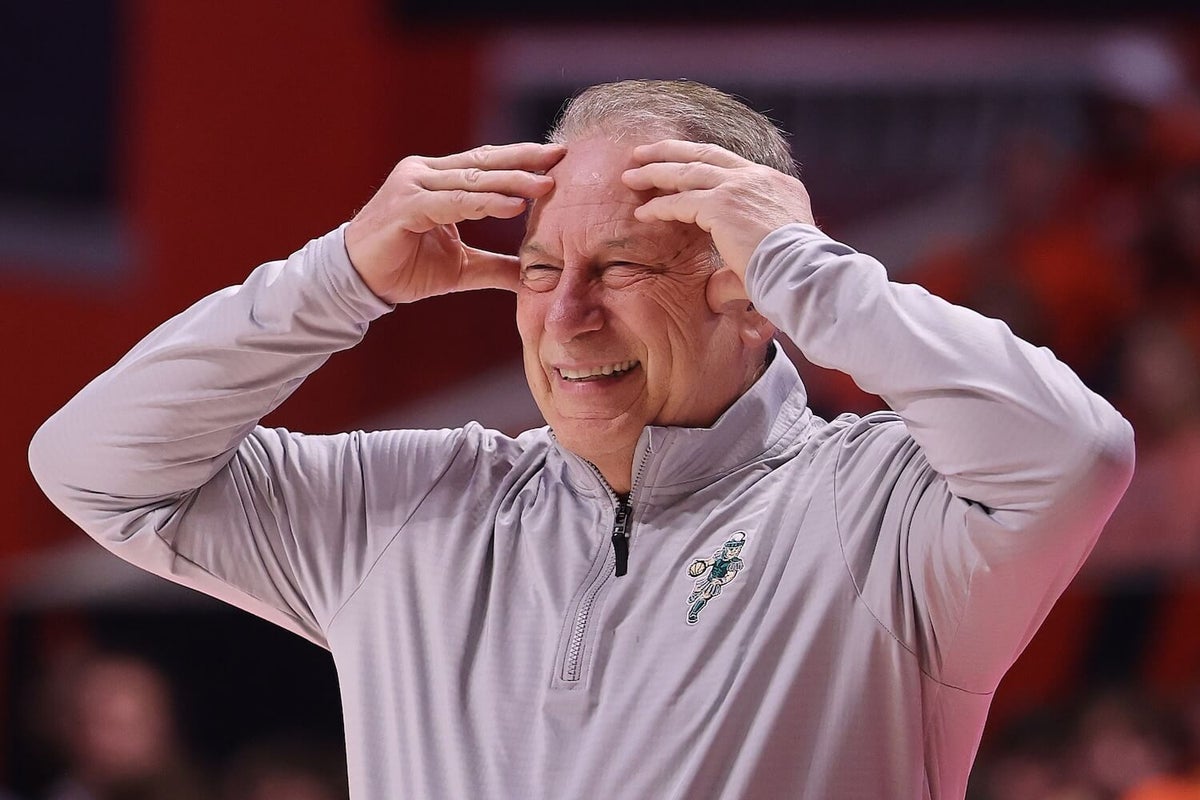
Two years after the Pomeroy study, I took part in a news conference that was essentially an interrogation of a coach who was set in his ways. Coach CroMagnon in this instance was Tom Izzo, whose Michigan State team had just lost its second game of the season after a last-second tying triple after Izzo went as usual with defend over foul.
He said then what remains true today: There are too many variables to make such a decision easy or obvious. How much time is left? If you’re fouling with more than five or six seconds left, how’s your foul shooting? How’s their 3-point shooting? How’s your 3-point defending? How’s your defensive rebounding? How’s their offensive rebounding? Have you worked enough with your players on fouling at the catch so there’s no chance they get there late and foul in the act of shooting — or even worse, foul and give up a four-point play to lose?
Do you trust these officials, who unlike NBA officials are not well-paid full-time employees who get reasonable amounts of rest in season, to not be fooled by the opposing player who raises as he’s hit to make it look like he’s in the act of shooting?
The Big East crew in Providence’s Jan. 28 win at Seton Hall somehow fell for that bit but was bailed out by missed free throws.
This was called a shooting foul on Jayden Pierre. Providence’s Coach Kim English did not agree.
What do you all think? pic.twitter.com/9NvG8zQKXN
— Ryan Cassidy (@ryancassidycbb) January 29, 2025
Also this season: Izzo made the rare decision to foul instead of defend. It worked, but just barely, because Illinois rebounded the intentional miss and got a shot off.
“I wouldn’t say I’m a foul guy — I’d hate to say that,” Izzo said a few weeks later. “I get a kick out of the analytics talk, like ‘always go for it on fourth and 1.’ Well, analytics doesn’t know if it’s snowing or if the center or fullback is hurt. And I’ve seen so many teams lose games because of free-throw cutouts. But we were worried (Illinois) had five shooters on the court, so we elected to foul. I wouldn’t bet your wife and life I’ll do it every time, but I see more value in it than I used to think.”
More people are fouling now because data supports it. Plenty of people still aren’t because data supports it. What data doesn’t support is for either strategy to dominate.
Justus was on staff at NC State last season, helping guide an astounding Final Four run that was possible only because of a late 3-pointer to tie Virginia in an eventual ACC tournament upset. Virginia coach Tony Bennett defended and lost. This season, Ohio State fouled at Purdue and won, and defended against Maryland and won.
“It depends on the opponent, honestly,” Tennessee State head coach Brian “Penny” Collins said.
Auburn coach Bruce Pearl declared that he’s a “foul guy.” Same with Vanderbilt coach Mark Byington. Tennessee coach Rick Barnes leans foul and prepares to foul, but that’s not a guaranteed choice, which makes sense for KenPom’s No. 1 team in adjusted defensive efficiency. Belmont coach Casey Alexander said he’s “defend almost every time” because he trusts solid, switching perimeter defense more than body bashing on the foul line.
“Only time I’m looking to foul is when their primary ballhandler is a really bad free throw shooter,” Alexander said. “I see games lost every year both ways.”
Oakland coach Greg Kampe is foul, always, with six seconds or fewer on the clock. But that’s not all — he’s foul, always, when up six with 12 seconds or fewer on the clock. That way, the opponent either has to settle for cutting it to four or start bouncing the ball off the rim and wasting seconds.
See, that’s the kind of thing the analytics people have to love. This brings back the Bilas comment from long ago on fouling up two.
“You’re seeing that a lot in Europe,” Justus said. “You can’t lose (on a 3). Maybe they’ll miss a free throw. If not, you get the last shot.”
It’s time to normalize accepting all “foul or defend up three” decisions as reasonable and dependent on variables. And to prepare for the great “foul or defend up two” debate.
(Photo of Tom Izzo: Michael Reaves / Getty Images)
[ad_2]
Source link