Like millions of Americans, you might be getting ready to fill out your NCAA Tournament bracket, hoping to find the magic formula to earn some cash and, perhaps more importantly, bragging rights over your friends, family and co-workers.
You might already have a system in mind for how to do it — many people do — but regardless of your approach, a few general rules are always good to keep in mind when filling out your bracket.
Here are 10 tips if you’re looking for guidance on your bracket picks this year.
1. Consider the size of your pool.
If you are in a large pool with a lot of people (let’s say more than 100), you might want to take a few more chances in the early rounds. This high-risk/high-reward strategy can sometimes help you outlast the 100-plus other people you are competing with, many of whom will just take the higher seed in any matchup. If you are in a smaller pool, you can probably afford to be a little more safe with your picks without dulling the payoff.
2. Trust the No. 1 and 2 seeds in the first two rounds …
The level of parity in men’s college basketball has improved to the point that we have actually seen two No. 1 seeds get knocked out in the first round within the past eight years. A decade ago, that seemed almost unimaginable. Every once in a while, a No. 15 seed will put a scare into a No. 2 seed and maybe knock them off. But those are few and far between, and generally speaking, your No. 1 and No. 2 seeds are going to at least make it to the Sweet 16. No. 2 seeds have lost in the second round just 46 times in 38 years (just a little more than one per year). No. 1 seeds have lost in the second round just 21 times (0.55 per year).
3. … but still pick upsets.
While the No. 1 and No. 2 seeds are generally safe bets in the early rounds, upsets are still going to happen. So you better make sure your bracket has a few of them in there since the tournament rarely follows the chalk perfectly the whole way through. On average, there are around eight upsets per year in the tournament (about 10 percent of the games) and almost never less than five. If you have less than five, maybe put a little more thought into some of those 7-10, 6-11, 5-12 games. Speaking of which …
4. A No. 12 or No. 13 seed is going to advance.
Maybe both, and perhaps more than one of each, if things pop off and go crazy. This is where your first-round upsets start to come into play, and this is especially true with the No. 12 seeds. Since the tournament expanded to 64 teams in 1985, there have only been six tournaments (out of 38) where a No. 12 seed did not advance beyond the first round (1988, 2000, 2007, 2015, 2018 and 2023). Overall, 12-seeds have a 53-99 record in the opening round (34.9 win percentage). No. 13 seeds are 32-120 (21.1 percent). Given those two percentages, your bracket should have at least one of those seeds advancing. The hard part is figuring out which one it will be.
5. All that said, don’t go crazy with the upsets.
If you have fewer than five upsets in your entire bracket, you probably did not put enough thought into it. But if you have more than 12 and find yourself starting to get up into the 14 or 15 range, you’re probably putting too much thought into it. Maybe you think the committee snubbed your team or left out a deserving program at the beginning, but they are generally pretty good at determining which teams are the best. There is a reason the higher seed is the higher seed. They’re generally better, and that tends to play out on the floor. As we said above, the average is eight upsets in any given tournament. There might be more. But it’s probably not going to get much higher than 12. A good rule of thumb: Cut the number of upset picks in your bracket in half by each round.
6. Anything can happen in one game.
Some teams are better than others. The data points are what they are. The analytics will give you some strong insights as to who might win. But this is still a single-elimination tournament, and no matter the sport or the level, some random noise can render everything you thought you knew useless in one game. Injuries, bad calls, a good shooting team going cold, a bad shooting team catching a random heater — some things you just can’t account for no matter how prepared you are, and sometimes results don’t have to make sense or be deserved.
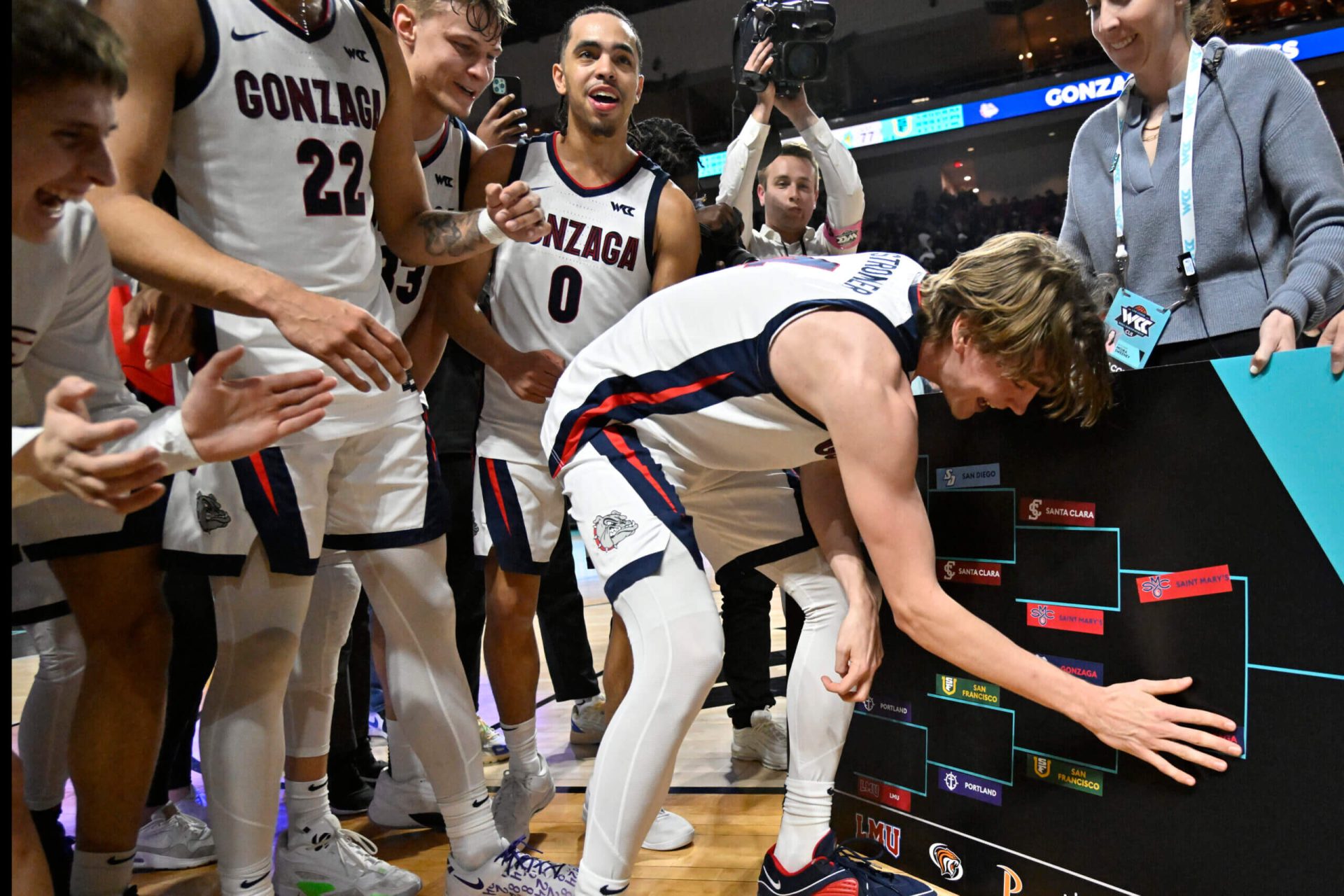
7. Gonzaga will give you a lot of mileage … but not all of it.
Gonzaga is a fantastic program. One of the best in the nation. It has won at least two tournament games in each of its past eight appearances (and often three or more). The Bulldogs have won at least one tournament game all the way back to 2008, and this year, as a No. 5 seed, they will probably do that again. But no matter how tempted you might be to pick them to win it all, no matter how much you might think it might be their year, some programs just don’t have the juice.
8. Always look for the guard matchups.
It feels like a tired cliche to say at this point, but it’s generally pretty true. Guard play can be the ultimate X-factor in the NCAA Tournament, and that might be a good place to start looking for your upsets. See a No. 12 seed with a strong backcourt that can control the pace of a game going up against a No. 5 with a big man as a focal point? That’s upset material! Go with that pick.
9. Remember that the players want it more than you do.
This is a good rule to follow for any sporting event that you are watching and it’s just general common courtesy. And it is worth a reminder. No matter how much money you have on it, no matter how big your bet is, no matter what the odds are, and no matter your rooting interest or loyalty, the kid who missed the foul shot or didn’t get the rebound feels worse about it and will live with it longer than you do or ever will. Don’t be a jerk and flood some 19-year-old’s social media accounts with nonsense because you lost $100.
10. Don’t forget to actually enjoy the games and the tournament.
Along with that, remember that sports are fun. The drama and suspense are incredible. The first week of the NCAA Tournament is one of the best spectacles in sports, with wall-to-wall single-elimination sports for 12 consecutive hours. Yeah, you want to win your pool. No, you do not want to lose money. But if you do, consider it the cost of the month-long enjoyment you were able to get. The real bracket win is the friends you made along the way.
(Photo credit: David Becker / Getty Images)